7 Warning Signs Your Sewer Line Needs Repair in New York City
Is your drain slow or making strange noises? Learn the top signs you need professional drain cleaning in NYC. Expert Brooklyn plumbers available 24/7. Call 844 833 2093.
Why NYC Sewer Lines Are Uniquely Vulnerable
Before we dive into the warning signs, it helps to understand why sewer line problems are so prevalent in New York City. The city presents a perfect storm of factors that can compromise your underground pipes.
The Age Factor
Much of New York City's housing stock dates back to the early 1900s or even the 1800s, and many homes still have their original sewer lines . Many homes still have clay, cast iron, or Orangeburg pipes—materials that simply break down over time . Cast iron pipes have a service life of about 50 years, and if your pipes have never been inspected, they could be well past their prime .
The Tree Root Problem
New York City is one of the most tree-dense urban areas in the United States, with nearly a quarter of the city covered by tree canopy . Those beautiful street trees that enhance property values and provide shade? Their roots have a "propensity for entering the joints of a sewer pipeline," as one NYC court noted, and can cause pipes to burst . In a landmark New York City case, a city-planted oak tree sent roots into a homeowner's properly constructed sewer line and caused it to fail completely .
The Material Reality
New York City has specific code requirements for sewer pipes. Cast iron pipes are required for sewer lines running from your home to the street . While cast iron is durable, it can rust and become blocked by mineral buildup over time . Many NYC homes also have clay or vitrified clay pipes, which are prone to cracking and root intrusion .
The Cost of Delay
The cost of living in NYC is 75% higher than the national average, which means labor costs for sewer repairs are significantly higher here than elsewhere . Basic sewer permit and application fees start at $400, and full pipe replacement can cost $80 to $250 per linear foot installed . Addressing problems early can save you thousands.
7 Warning Signs Your Sewer Line Is Failing
Your home will usually give you plenty of warning before a sewer line fails completely. Here are the seven most critical signs to watch for.
1. Multiple Drains Are Slow or Backed Up
This is often the first and most telling sign that something is wrong with your main sewer line. If only one drain is slow, the problem is likely a localized clog in that specific pipe. But if multiple drains throughout your home are draining slowly or backing up simultaneously, the problem is almost certainly in your main sewer line .
The main sewer line is the largest-diameter pipe that collects wastewater from all your fixtures—toilets, sinks, showers, and appliances—and carries it out to the city sewer . When this pipe is blocked or damaged, every fixture in your home is affected. You might notice that your kitchen sink is slow, your shower is pooling water, and your toilet is struggling to flush—all at the same time.
What it means: A blockage, crack, or collapse in your main sewer line is restricting the flow of wastewater . The problem is system-wide, not localized.
2. Gurgling or Bubbling Noises from Toilets or Drains
Have you noticed strange gurgling, bubbling, or rumbling sounds coming from your drains or toilets? These sounds are often dismissed as harmless, but they're actually one of the most common early warning signs of a sewer line problem .
A gurgling sound results from air being trapped in your plumbing system. When a blockage or partial blockage exists in the sewer line, water can't flow freely. As water tries to push past the obstruction, air bubbles are forced backward through the drain, creating the gurgling sound . You might also notice bubbles rising in your toilet bowl when you run water in the sink or take a shower .
What it means: Air is trapped behind a blockage, or a pipe is damaged and allowing air to enter the system . This is often a sign of a partial blockage or a pipe that's beginning to collapse.
3. Foul Sewer Odors in or Around Your Home
A healthy sewer system is sealed—wastewater flows through pipes without any gases escaping into your living space. If you smell sewage inside your home or in your yard, something is wrong .
Sewer gas contains hydrogen sulfide, methane, and other compounds that produce that unmistakable rotten egg smell. When you can smell it, it means sewer gas is escaping from somewhere it shouldn't. This typically indicates a crack, break, or leak in your sewer line .
The smell might be most noticeable near floor drains, in your basement, or outside near where your sewer line runs . If you notice this smell consistently, especially when running water, call a professional immediately.
What it means: Your sewer line has a leak or break that is allowing gases to escape . This is both a health hazard and a sign of structural damage.
4. Unusually Lush or Green Patches in Your Yard
This might sound like good news—after all, who doesn't want a greener lawn? But when those lush, green patches appear in a distinct line running across your yard, it's a major red flag .
Sewage leaking from a damaged pipe acts as a fertilizer, providing nutrients that make grass grow faster, thicker, and greener than surrounding areas . If you notice a strip of unusually lush grass—especially if it follows the path of your sewer line—it's a sign that your pipe is leaking wastewater into the soil .
In some cases, you might also see sunken or depressed areas in your yard where the soil has settled due to the leak .
What it means: Your sewer line is leaking underground, and wastewater is saturating the soil above it .
5. Sewage Backing Up into Tubs, Toilets, or Basements
This is the scenario every homeowner dreads—and it's the clearest, most urgent sign that you have a serious sewer line problem. When water backs up into your tub, shower, or basement floor drain—especially when you flush a toilet or run the washing machine—it means your main sewer line is blocked or broken .
When the main line is obstructed, wastewater has nowhere to go. The path of least resistance is often the lowest drain in your home, which is why sewage often appears first in basement floor drains or first-floor showers and tubs . This is not just inconvenient—it's a health emergency that requires immediate professional attention.
If sewage is backing up into your home:
-
Stop using all water fixtures immediately
-
Turn off electricity near standing water
-
Keep people and pets away from affected areas
What it means: Your main sewer line is completely blocked or collapsed, and wastewater is flowing back into your home .
6. Your Home Has 30+ Year Old Cast Iron or Clay Pipes
This isn't a symptom you'll necessarily notice on a daily basis, but it's arguably one of the most important factors in determining whether you need sewer line repair. Cast-iron sewer pipes have a 50-year service life . If your home was built before 1980 and the sewer line has never been replaced, it's at significant risk of failure.
Many NYC homes still have original clay, cast iron, or Orangeburg pipes installed in the early 1900s . These pipes break down over time due to corrosion, ground shifting, and root intrusion. Clay pipes, in particular, are vulnerable to cracking and root penetration because of their jointed construction—the same issue that caused the pipe in the landmark NYC court case to fail .
Even if you haven't noticed other warning signs yet, having old pipes means you should have your sewer line inspected with a video camera before a catastrophic failure occurs .
What it means: Your pipes are approaching or exceeding their expected service life and are at high risk of failure.
7. Water in Unusual Places (When You're Not Using Water)
This is a subtle but important sign. If you notice standing water or wet spots in your basement when it hasn't rained, or if you find water pooling in your yard along the path of your sewer line, it could indicate an underground leak .
In NYC's tightly packed neighborhoods, you might also notice that your water bills have suddenly increased for no apparent reason—a sign that water is escaping from your system before reaching the city sewer.
What it means: Your sewer line is leaking, and wastewater is saturating the surrounding soil .
What Causes Sewer Line Damage?
Understanding what's causing your sewer line problems helps you make informed decisions about repair options and prevention. Here are the most common causes in NYC properties.
Tree Root Infiltration
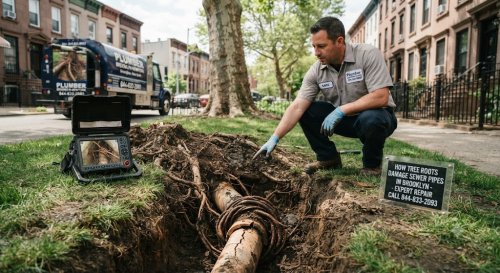
Tree roots are one of the leading causes of sewer line clogs and damage in households worldwide . In New York City, with its extensive tree canopy, this is an especially significant problem . Tree roots are naturally drawn to the moisture and nutrients in your sewer line. Even tiny cracks or loose joints in your pipes are enough for hair-like roots to enter. Once inside, they thrive on the constant supply of water and organic matter, growing rapidly and eventually forming dense root balls that can completely block or crush pipes .
As the NYC court case Norwood v. City of New York established, a city-planted tree with roots that have a "propensity for entering the joints of a sewer pipeline" can be held liable for damage, but that process takes years of litigation . You're better off addressing the problem proactively.
Old Piping Materials
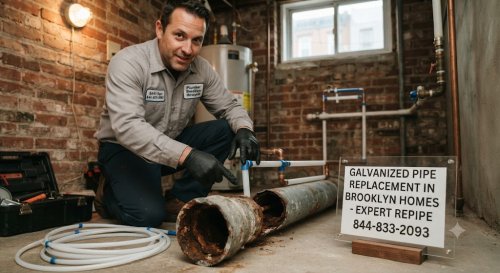
Many NYC homes still have clay, cast iron, or Orangeburg pipes from the early 1900s . These materials break down over time. Cast iron corrodes and rusts from the inside, creating rough surfaces that catch debris and narrow the pipe diameter. Clay pipes can crack due to ground shifting. Orangeburg pipe (a type of bituminized fiber pipe) can collapse entirely .
Ground Shifting and Settlement
Over decades, buildings settle and shift. So do the pipes underneath. This movement causes stress, misalignment, and cracks in your sewer line . In NYC's clay-heavy soil, this is particularly common.
Improper Use
Grease, oil, and fats poured down kitchen drains are the enemy of your plumbing system . They solidify in pipes and create sticky surfaces that trap debris. Flushable wipes—despite their name—don't break down quickly enough and are a leading cause of clogs. Feminine hygiene products, paper towels, and other items flushed down toilets can also cause blockages .
What To Do Immediately If You Spot These Signs
If you notice any of the warning signs described above, here's what you should do:
-
Stop using water where possible. Every flush, shower, or sink use adds more wastewater to an already compromised system.
-
Document what you're seeing. Take photos of backups, wet spots, or unusual yard conditions. This can help your plumber diagnose the problem.
-
Call a licensed professional immediately. Don't attempt DIY fixes—sewer lines are deep underground and require specialized equipment.
-
Don't use chemical drain cleaners. They can damage aging cast iron pipes and won't resolve the underlying issue .
-
For sewage backups, stay safe. Sewage contains harmful bacteria and viruses. Keep people and pets away from affected areas .
Repair vs. Replacement: What Are Your Options?
Once a professional has diagnosed your sewer line problem, you'll need to decide between repair and full replacement. Here's what to expect in NYC.
Drain Snaking or Augering ($175–$440)
This method uses a flexible metal cable with a cutting head to break up clogs . It's suitable for minor blockages but often only pokes a hole through the clog rather than cleaning the entire pipe wall .
Best for: Simple clogs, not structural damage.
Hydro Jetting ($610–$1,050)
Hydro jetting uses highly pressurized water to scour the entire interior of your pipes, removing debris, grease, and mineral buildup . It's more thorough than snaking and can clear out roots and scale.
Best for: Recurring clogs, grease buildup, and preparing pipes for inspection .
Trenchless Pipe Repair ($105–$440 per foot)
This method involves inserting a new pipe liner or pulling a new pipe through the existing damaged pipe, avoiding the need for excavation. It's significantly less disruptive than traditional replacement .
Best for: Cracked pipes without complete collapse, especially in hard-to-access areas.
Full Pipe Replacement ($5,250–$43,750)
If your pipe is collapsed, severely corroded, or past its service life, full replacement is necessary. In NYC, this typically involves excavating to access the pipe and replacing it with new cast iron pipe, as required by code . Costs range from $80 to $250 per linear foot installed, with labor accounting for about 50% of the total .
Best for: Pipes that are collapsed, completely blocked, or beyond their service life .
Frequently Asked Questions
Q1: How much does sewer line repair cost in New York City?
The average cost to clear a main sewer line clog in NYC is $431**, with most homeowners paying between **$245 and $658** . For more serious repairs, costs can range from **$90 to $440 per linear foot** . Full sewer line replacement averages **$80 to $250 per linear foot** installed, with total costs often ranging from **$5,250 to $43,750 depending on the extent of the work and accessibility . Labor costs in NYC are significantly higher than the national average due to the 75% higher cost of living .
Q2: What are the most common signs of a sewer line problem?
The most common warning signs include: multiple drains that are slow or backed up, gurgling sounds from drains or toilets, foul sewer odors in or around your home, unusually green patches in your yard, and sewage backing up into tubs or basements .
Q3: Why are NYC homes so prone to sewer line problems?
NYC homes face unique challenges: aging infrastructure with pipes dating to the early 1900s, extensive tree canopy that leads to root intrusion, strict code requirements for cast iron pipes, and the high cost of labor and permits .
Q4: Can tree roots really damage my sewer line?
Yes—tree roots are one of the leading causes of sewer line damage in households worldwide . In a landmark NYC case, a city-planted oak tree sent roots into a properly constructed sewer line and caused it to burst . Roots can enter through even tiny cracks and grow rapidly inside pipes, causing blockages and structural damage.
Q5: How do I know if I need a repair or a full replacement?
If your pipes are over 50 years old (common in NYC), have collapsed, or are severely corroded, replacement is usually the best option. If the issue is a clog or minor crack in otherwise sound pipes, a repair might suffice . A video camera inspection can help determine the best course of action.
Q6: What causes sewer line backups?
The most common causes include: pouring grease and oil down drains, flushing debris and wipes (even "flushable" ones), tree root infiltration, sagging pipes, and pipe damage from age or ground shifting .
Q7: Is a sewer line backup a health emergency?
Yes. Sewage contains harmful bacteria, viruses, and pathogens. If sewage is backing up into your home, stop using water immediately, keep people and pets away from affected areas, and call a professional right away .
Q8: What should I do if I think my sewer line is broken?
Stop using water where possible, document what you're seeing with photos, and call a licensed plumber immediately. Don't use chemical drain cleaners, as they can damage aging pipes .
Q9: Do I need a permit for sewer line repair in NYC?
Yes. Sewer line repairs in New York City require a permit from the Department of Environmental Protection. The minimum permit fee is $130, and costs can increase based on the extent of the work .
Q10: Are there less invasive options than digging up my yard?
Yes. Trenchless pipe repair—which involves inserting a new pipe liner or pulling a new pipe through the existing damaged pipe—can often repair cracked pipes without excavation . However, severe damage or collapsed pipes may still require traditional excavation.
When to Call a Professional
If you've noticed any of the warning signs discussed in this guide, it's time to call a professional plumber. In New York City, sewer line issues are not DIY projects—they require specialized equipment, knowledge of local codes, and often, permits and inspections.
Call immediately if:
-
Sewage is backing up into your home
-
You smell sewer gas consistently
-
Multiple drains are affected
-
You have standing water in your yard or basement
-
Your home has original pipes from before 1980
Get Professional Sewer Line Repair in Brooklyn, NYC
At Plumber in Brooklyn New York City, we specialize in diagnosing and repairing sewer line problems for homeowners throughout the five boroughs. Our licensed plumbers use the latest technology—including video camera inspection and hydro jetting—to quickly identify problems and provide effective, long-lasting solutions.
Why Choose Us?
-
Licensed & Insured—Fully compliant with NYC regulations
-
24/7 Emergency Service—Available around the clock
-
Upfront Pricing—No hidden fees or surprise charges
-
Specialized Equipment—Video inspection, hydro jetting, and more
-
NYC Code Expertise—We know the local requirements inside and out