Copper vs. PEX vs. Galvanized Pipes: Brooklyn Guide
Compare Copper vs. PEX vs. Galvanized Pipes for Brooklyn homes. Learn costs, lifespan, NYC plumbing code requirements, and how to choose the best pipe.

Copper vs. PEX vs. Galvanized Pipes: Which Is Best for Brooklyn Homes?
If you live in Brooklyn, your home's plumbing system operates under conditions unlike almost anywhere else in the country. From historic 19th-century brownstones in Park Slope and Brooklyn Heights to pre-war multi-family apartment buildings in Crown Heights and newly constructed high-rises in DUMBO, Kings County properties feature a complex blend of old-world architecture and modern municipal regulations.
When you experience low water pressure, discolored tap water, or unexplained ceiling leaks, the culprit is almost always hiding inside your walls: aging, corroded, or incompatible plumbing pipes.
Choosing the right piping material isn't just a matter of picking what's cheap or popular at the local hardware store. In New York City, your choice impacts drinking water safety, water volume, fire safety compliance, resistance to freezing winter temperatures, and total installation costs.
Understanding the differences between Copper vs. PEX vs. Galvanized Pipes: Which Is Best for Brooklyn Homes? is essential whether you are planning a full-home repiping project, remodeling a bathroom, or simply trying to figure out why your shower turns into a trickle when someone flushes the toilet down the hall.
What Is Copper vs. PEX vs. Galvanized Pipes: Which Is Best for Brooklyn Homes??
This guide compares the three primary water supply piping materials found across residential properties in Brooklyn. Each material represents a different era in American manufacturing and plumbing engineering:
-
Galvanized Steel Pipes: Heavy steel pipes coated in a layer of protective zinc. Popular from the late 1800s through the mid-1960s, these pipes are now reaching the end of their operational lifespan across NYC homes.
-
Copper Pipes: Rigid, highly durable seamless metal pipes that became the industry standard in the 1960s. Copper is celebrated for its longevity, bacteria resistance, and fire rating under New York City Department of Buildings (DOB) codes.
-
PEX (Cross-Linked Polyethylene): Flexible, high-density plastic tubing introduced in recent decades that has revolutionized indoor plumbing retrofits due to its ease of installation, low cost, and freeze resistance.
The Core Problem Brooklyn Property Owners Face
Many Brooklyn property owners struggle with "mixed-material" plumbing systems. Over 50 to 100 years of quick fixes, previous owners may have spliced sections of modern copper or PEX directly into original galvanized steel lines. When dissimilar metals touch without dielectric isolation, accelerated galvanic corrosion occurs, causing pinhole leaks and rapid internal pipe decay.
Understanding which material suits your property layout, budget, and local building code prevents structural damage and avoids costly re-work.
Why Do Plumbing Pipe Failures Happen in Brooklyn?
Pipes don't fail by accident; they degrade due to physical, chemical, and environmental stressors inherent to urban living in New York.
1. Aging Infrastructure & Internal Corrosion
Galvanized steel pipes corrode from the inside out. As the internal zinc coating wears away, bare iron reacts with oxygen and minerals in municipal water, building up thick layers of rust and mineral scale (tuberculation). This shrinks a 3/4-inch pipe down to the opening size of a drinking straw over several decades.
2. High Municipal Water Pressure & Pressure Spikes
NYC water flows from upstate reservoirs under significant gravity pressure. If a building’s pressure-reducing valve (PRV) fails, water pressure spiking above 80 PSI puts constant stress on pipe joints, triggering pinhole leaks in thin-walled copper or blowing out fragile corroded threads on galvanized fittings.
3. Hard Water and Chemical Mineral Buildup
While NYC water is relatively soft compared to other regions, mineral buildup still occurs over decades—especially inside hot water supply branches where heat accelerates mineral precipitation.
4. Severe Winter Freezes & Drafty Pre-War Construction
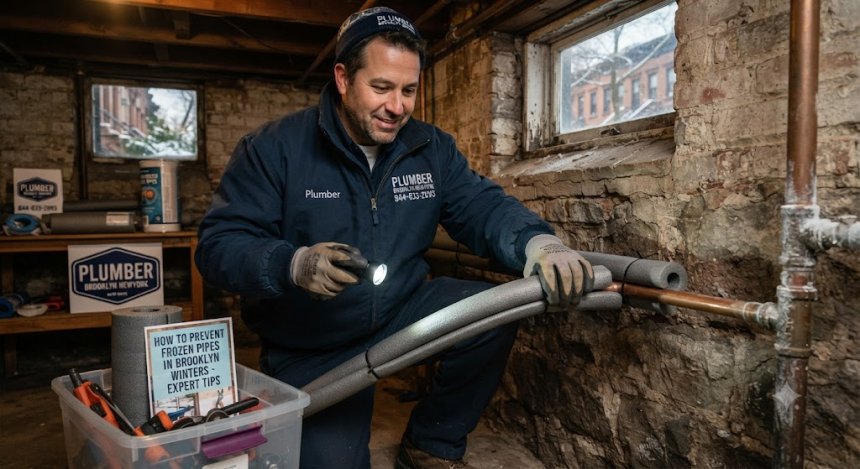
Brooklyn winters regularly bring sub-freezing temperatures. Cold drafts penetrating uninsulated brownstone basements, crawlspaces, or outer brick walls freeze trapped water inside rigid pipes. Because rigid copper and galvanized steel cannot expand, the ice pressure splits the pipe wall open.
5. Improper Dissimilar Metal Installations
Connecting copper directly to galvanized steel without a dielectric union creates an active battery-like chemical reaction. The galvanized pipe corrodes at an accelerated pace right at the joint, resulting in sudden catastrophic breaks inside enclosed plaster walls.
Signs You Should Never Ignore
Your plumbing system gives clear warning signs long before a pipe bursts open and floods your living room ceiling.
-
Persistent Low Water Pressure: If water flow decreases across multiple faucets simultaneously, your main supply lines are likely choked with internal rust and scale.
-
Rusty, Brown, or Yellow Tap Water: Discolored water—especially when turning on the hot water tap after a few hours of non-use—indicates flaking rust inside deteriorating galvanized lines.
-
Frequent Fluctuation in Shower Temperature: When flushing a toilet causes the shower pressure to drop dramatically, your branch lines lack the internal diameter needed to carry adequate volume.
-
Pinhole Leaks and Green Oxidation on Copper: Bluish-green crust or powdery build-up around copper solder joints signals slow, active micro-leaks behind vanity bases or in basement ceiling joists.
-
Damp Plaster, Bubbling Paint, or Ceiling Stains: Soft spots on plaster walls or yellowing water rings on brownstone ceilings indicate an active hidden leak along a vertical plumbing riser.
-
Musty Odors and Unexplained Mold Growth: Water collecting behind tile or inside wall chaseway spaces breeds mold within 24 to 48 hours.
-
Unexplained Increases in NYC DEP Water Bills: A sudden jump in municipal water charges usually means water is leaking underground or inside a crawlspace.
Common Plumbing Problems Related to Pipe Material
Using the wrong or outdated piping material leads to cascading issues across your property:
-
Slab Leaks and Sub-Floor Breaks: Underground water entries or sub-floor branches made of corroded metal can break silently beneath concrete basement slabs.
-
Fixtures Clogged by Rust Flakes: Loose rust flakes from aging galvanized lines travel downstream, clogging faucet aerators, showerheads, and sensitive water heater valves.
-
Burst Pipes During Winter Cold Snaps: Rigid pipes exposed to drafty outer walls in neighborhoods near the East River freeze and split open unexpectedly.
-
Reduced Appliance Lifespan: Sediment and rust particles traveling through supply lines ruin the internal valves of modern dishwashers, washing machines, and tankless water heaters.
Comprehensive Comparison: Copper vs. PEX vs. Galvanized
To understand which material fits your Brooklyn property best, compare their structural characteristics side by side:
| Feature / Factor | Galvanized Steel | Seamless Copper | PEX (Cross-Linked Polyethylene) |
| Primary Era | 1880s – 1960s | 1960s – Present | 1990s – Present |
| Average Lifespan | 40 – 50 Years (Obsolete) | 50 – 70+ Years | 30 – 50 Years |
| Corrosion Resistance | Extremely Poor (RUSTS internally) | High (Resists scale & rust) | Complete (Immune to corrosion) |
| Freeze Tolerance | None (Rigid; splits easily) | Low (Rigid; prone to bursting) | Excellent (Expands slightly with ice) |
| Material Cost | High (Heavy manufacturing) | High (Fluctuating copper market) | Low to Moderate |
| Installation Speed | Slow (Requires threaded joints) | Moderate (Requires soldering/press fittings) | Fast (Flexible tubing snakes around studs) |
| Wall Demolition Needed | Extensive | Moderate to High | Minimal (Flexible snake routing) |
| NYC DOB Code Approval | Obsolete for new potable water | Approved for all supply uses | Approved with proper fire-stopping |
Deep Dive: The Pros and Cons of Each Material
Galvanized Steel Pipes
  GALVANIZED STEEL PIPE (CROSS-SECTION OVER TIME)

  New Pipe (Year 0)           Aging Pipe (Year 30)         Corroded Pipe (Year 50+)
  ┌───────────────┐           ┌───────────────┐            ┌───────────────┐
  │   Full Flow   │           │ Zinc Layer    │            │ Internal Rust │
  │   Clear Path  │    ──►    │ Eroding Away  │     ──►    │ Chokes Water  │
  │   (3/4 Inch)  │           │ Minor Scale   │            │ Flow To Trickle│
  └───────────────┘           └───────────────┘            └───────────────┘
-
The Verdict: Obsolete. Replace when possible.
-
Why It Fails: Galvanized pipes were revolutionary a century ago, but every original galvanized installation in Brooklyn is past its functional lifespan. The zinc coating wears off, exposing raw steel to water. This leads to internal rust buildup, heavy scale, pinhole leaks at threaded joints, and lead contamination if lead-soldered unions were used.
-
Action Plan: Never repair galvanized pipe with more galvanized pipe. If a section fails, work with a licensed master plumber to start systematically replacing the run with copper or PEX.
Copper Pipes
-
The Verdict: The proven gold standard for durability, long lifespan, and multi-family fire safety.
-
Type L vs. Type M Copper: Plumbers primarily use Type L copper (thicker wall, higher pressure rating) for indoor potable supply lines in NYC. Type M (thinner wall) is generally reserved for light heating loops or lower-pressure setups.
-
Pros:
-
Exceptional Lifespan: Lasts 50 to 70+ years when properly installed.
-
Fire Safety: Copper does not burn, melt at residential fire temperatures, or emit toxic fumes, making it ideal for vertical risers in multi-family Brooklyn buildings.
-
Natural Antibacterial Properties: Copper naturally inhibits bacterial growth inside drinking water lines.
-
High Structural Integrity: Holds its shape without sagging over long horizontal runs.
-
-
Cons:
-
Higher Material & Labor Costs: Copper commodity pricing is high, and soldering fittings requires licensed skilled labor.
-
Rigidity: Requires cutting into plaster walls and drilling through joists to maneuver around corners.
-
Susceptible to Freezing: Rigid copper splits when water freezes solid inside it.
-
PEX (Cross-Linked Polyethylene)
-
The Verdict: The modern choice for fast, cost-effective retrofits and freeze-prone installations.
-
PEX-A vs. PEX-B: PEX-A (manufactured via the Engel method) is the most flexible, offering shape memory and superior freeze expansion. PEX-B is slightly stiffer but highly resistant to chlorine degradation.
-
Pros:
-
Flexible Installation: PEX bends around corners and snakes through existing wall cavities like wiring, reducing the need to cut open historic brownstone plaster or wood trim.
-
Freeze Expansion: PEX can expand up to eight times its diameter without bursting, making it suitable for outer wall runs or unheated drafty basements.
-
Corrosion & Scale Immunity: Being plastic, PEX never rusts, pits, or builds up internal mineral scale.
-
Lower Installation Labor Costs: Uses mechanical crimp, clamp, or expansion connections rather than open flame soldering, cutting labor time significantly.
-
-
Cons:
-
UV Degradation: Cannot be installed outdoors or exposed to direct sunlight.
-
Not Suitable for Unshielded Vertical Risers in Multi-Family Spaces: NYC DOB plumbing codes require strict fire-stop penetrations and sleeves when passing PEX through multi-story fire-rated floor assemblies.
-
Rodent Susceptibility: In rare cases of severe rodent infestation, pests can chew through plastic PEX tubing.
-
Step-by-Step Professional Repiping Process
Replacing outdated or leaking water lines in a Brooklyn residence requires careful planning, municipal code compliance, and systematic execution.
┌────────────────────────────────────────────────────────────────────────┐
│                   THE 7-STEP PROFESSIONAL REPIPING WORKFLOW            │
└────────────────────────────────────────────────────────────────────────┘
  [1. Initial Inspection & Video Mapping]
                     │
                     ▼
  [2. System Design & Code Review]
                     │
                     ▼
  [3. Upfront Itemized Proposal]
                     │
                     ▼
  [4. Area Protection & Water Isolation]
                     │
                     ▼
  [5. Pipe Extraction & Material Installation]
                     │
                     ▼
  [6. Pressure Testing & NYC DOB Code Sign-Off]
                     │
                     ▼
  [7. Drywall/Plaster Patching & Final Cleanup]
-
Step 1: On-Site Inspection & Layout Mapping: A licensed plumber evaluates your current pipe material, inspects basement water entries, measures water pressure, and maps out vertical risers.
-
Step 2: Engineering & Material Selection: Based on property type (single-family rowhouse vs. multi-family condo), the plumber selects the optimal material setup (e.g., a hybrid copper riser with PEX branch system).
-
Step 3: Upfront Itemized Estimate: You receive a detailed scope of work explaining labor, material choices, necessary wall access points, permit fees, and estimated completion times.
-
Step 4: Site Protection & Water Isolation: Technicians cover floors, furniture, and hallways with protective runners. Main water supply lines are isolated to prevent unexpected flooding.
-
Step 5: Professional Installation & Structural Routing: Technicians carefully route new copper or PEX lines through joists and wall chases using specialized tools, minimizing cuts to historic plaster or tile wherever possible.
-
Step 6: High-Pressure Leak Testing & DOB Sign-Off: The new system is pressurized with water or air above normal operating levels and monitored for pressure drops to ensure zero joint leaks before sealing walls.
-
Step 7: Clean-Up & Maintenance Guidance: Old piping is disposed of safely, access panels are installed or drywall patched, and the homeowner receives guidance on valve locations and main shut-off procedures.
Can You Fix It Yourself?
With online DIY guides readily available, some homeowners consider taking on pipe replacements themselves. However, in dense Brooklyn environments, DIY piping work carries major structural and legal risks.
What Homeowners Can Safely Handle
-
Installing screw-on faucet aerators or low-flow showerheads.
-
Replacing accessible under-sink flexible braided supply hoses (using shut-off valves).
-
Adding foam insulation sleeves to exposed basement copper or PEX pipes before winter.
When DIY Becomes Dangerous
-
Open-Flame Soldering Inside Walls: Torch-soldering copper fittings near dry 100-year-old wood framing inside brownstone wall cavities poses a severe fire hazard.
-
Mixing Metals Without Dielectric Unions: Connecting new PEX or copper fittings directly to old galvanized iron causes rapid chemical corrosion that fails within months.
-
Unpermitted Multi-Family Plumbing Work: NYC local laws mandate that major supply line modifications and repiping in multi-family buildings be performed by a Licensed Master Plumber (LMP) to ensure building safety and retain insurance coverage.
Tools Professionals Use for Pipe Inspections & Replacements
Professional plumbing companies invest in specialized tools to install piping systems quickly and cleanly without damaging your home.
-
ProPress Pipe Crimping Tools: Hydraulic crimping tools that join copper fittings mechanically in seconds without using an open flame, eliminating fire risks in historic properties.
-
PEX Expansion & Crimp Tools: Specialized tools that expand PEX-A tubing and sleeves, creating mechanical joints that strengthen as the pipe contracts.
-
Ultrasonic Leak Detectors: Sensitive acoustic equipment used to trace pinhole leaks behind thick plaster, tile, or concrete without cutting exploratory holes.
-
High-Resolution Inspection Cameras: Slim fiber-optic cameras inserted into wall chaseways or floor cavities to map pipe routes before cutting access panels.
-
Digital Pressure Gauges: High-precision gauges used to conduct static and dynamic pressure tests across new supply installations.
How Long Does Pipe Replacement Usually Take?
The time required to repair or replace plumbing lines varies based on job scope, building height, and wall access:
-
Single Fixture Pipe Repair (2 to 4 Hours): Replacing corroded shut-off valves and under-sink branch lines in a single bathroom or kitchen.
-
Partial Line Retrofit (1 to 2 Days): Replacing vertical supply risers running from the basement up to a top-floor bathroom.
-
Whole-Home Brownstone Repiping (3 to 5 Days): Replacing all domestic supply lines across a multi-story rowhouse, including main entries, risers, and horizontal branch lines.
-
Multi-Unit Building Repiping (1 to 2 Weeks+): Complex multi-family residential repiping scheduled floor-by-floor to minimize disruption to tenants.
Cost Factors: What Drives Your Brooklyn Repiping Invoice?
Rather than relying on fixed online quotes, it helps to understand the underlying cost drivers of a plumbing invoice in Kings County.
┌─────────────────────────────────────────────────────────────────────────┐
│                    BROOKLYN REPIPING COST DRIVERS                       │
├─────────────────────────────────────────────────────────────────────────┤
│ 1. Material Selection (Copper vs. PEX vs. Hybrid Systems)               │
│    (Copper raw materials cost significantly more than PEX tubing)       │
├─────────────────────────────────────────────────────────────────────────┤
│ 2. Building Height & Wall Accessibility                                 │
│    (3-story brownstones require more vertical labor than 1-story layouts)│
├─────────────────────────────────────────────────────────────────────────┤
│ 3. Number of Plumbing Fixtures                                          │
│    (Count of sinks, toilets, tubs, showers, hose bibs, washing machines)│
├─────────────────────────────────────────────────────────────────────────┤
│ 4. Municipal DOB Permits & Master Plumber Sign-Off Fees                 │
│    (Filing administrative permits for major multi-family modifications) │
├─────────────────────────────────────────────────────────────────────────┤
│ 5. Demolition, Wall Access, and Plaster/Tile Restoration Needs         │
│    (Minimizing openings in historic walls requires specialized labor)  │
└─────────────────────────────────────────────────────────────────────────┘
Industry Cost Factor Note: Plumbing repair and repiping costs vary depending on the severity of the problem, accessibility, materials required, emergency service, property type, and local labor rates.
Hidden Truths Homeowners Should Know
-
Small Leaks Create Massive Structural Bills: A small drip inside a wall chase silently rots floor joists, ruins ceiling plaster, and leads to expensive structural framing repairs.
-
Cheap Temporary Clamps Fail Under Pressure: Rubber emergency patch clamps are temporary fixes. Water pressure spikes overnight will push them off, causing sudden basement flooding.
-
Homeowners Insurance May Reject Neglect Claims: Insurance policies generally cover sudden pipe bursts. They routinely deny water damage claims caused by long-term, unaddressed leaks from visibly corroded galvanized pipes.
-
Galvanized Pipes Mask Low Pressure Until Total Failure: Galvanized pipes don't always leak right away; instead, they slowly choke off water flow internally until an entire bathroom loses water completely.
-
Dielectric Corrosion Is Real: Splicing copper into old galvanized steel without dielectric unions triggers galvanic action, destroying the iron pipe threads within a few years.
-
Annual Valve Checks Save Thousands: A main shut-off valve that has seized open is useless during an emergency. Testing your main valve once a year ensures you can shut off water fast if a pipe breaks.
15 Common Mistakes Homeowners Make
-
Ignoring Slow Drops in Water Pressure: Assuming low pressure is "just an old house issue" instead of diagnosing internal galvanized rust buildup.
-
Splicing Copper Directly to Galvanized Iron: Creating galvanic corrosion by omitting dielectric isolators.
-
Using Chemical Drain Cleaners on Thinning Metal Pipes: Pouring caustic chemicals into old galvanized or thin copper lines, eating through pipe walls.
-
Leaving Hoses Attached in Winter: Trapping water in outdoor bibs, causing connected indoor supply lines to freeze and split open.
-
Hiring Unlicensed Handymen for Major Pipe Work: Lacking Master Plumber licensing, insurance coverage, and knowledge of NYC DOB fire codes.
-
Skipping Main Water Shut-Off Tests: Discovering your main water shut-off valve is frozen shut during an active pipe burst emergency.
-
Ignoring Bluish-Green Crust on Copper: Dismissing pinhole oxidation crust as cosmetic instead of fixing the slow leak behind it.
-
Over-Tightening Threaded Pipe Joints: Stripping brass or plastic threads by applying excess force with heavy pipe wrenches.
-
Installing Non-Code Plastic Pipes in Exposed Heat Spaces: Running standard non-rated plastic tubing too close to steam boilers, water heater flues, or chimney chases.
-
Failing to Insulate Drafty Rim Joists: Leaving exposed water pipes unprotected in cold basement ceiling spaces.
-
Hanging Heavy Clothes from Exposed Ceiling Pipes: Using exposed basement copper or galvanized lines as laundry drying racks, stressing soldered joints.
-
Forgetting to Update Old Gate Valves to Ball Valves: Relying on ancient gate valves that leak around the stem instead of modern quarter-turn brass ball valves.
-
Waiting for Total Pipe Failure Before Planning Repiping: Delaying replacement until an emergency burst forces an expensive late-night repair.
-
Covering Up Active Wall Leaks with Drywall Compound: Patching over water-stained walls without fixing the leaking pipe inside.
-
Choosing Piping Material Based Solely on Upfront Price: Ignoring fire ratings, local codes, or long-term resale value when selecting materials.
Proactive Plumbing Maintenance Tips
Simple preventative measures can extend the lifespan of your piping system and prevent sudden cold-weather emergencies.
┌─────────────────────────────────────────────────────────────────────────┐
│                    SEASONAL PIPE PROTECTION CHECKLIST                   │
├────────────────────────────┬────────────────────────────────────────────┤
│ Spring & Summer            │ Fall & Winter                              │
├────────────────────────────┼────────────────────────────────────────────┤
│ - Inspect exposed basement │ - Disconnect & drain outdoor garden hoses  │
│   copper for green crust   │ - Wrap exposed rim-joist pipes with foam   │
│ - Exercise main shut-offs  │ - Seal cold air gaps in foundation walls   │
│ - Check pressure reducer   │ - Maintain indoor heat at 55°F minimum     │
└────────────────────────────┴────────────────────────────────────────────┘
-
Test Your Main Water Valve Annually: Turn your main water shut-off valve off and on once a year to keep the internal mechanism moving smoothly.
-
Insulate Pipes in Unheated Basements: Wrap all exposed copper and PEX water lines in unheated crawlspaces or basements with foam insulation sleeves.
-
Keep Indoor Heat at 55°F Minimum: Even if traveling during winter, keep your thermostat set to at least 55°F to stop uninsulated wall pipes from freezing.
-
Upgrade Old Gate Valves to Quarter-Turn Ball Valves: Replace corroded multi-turn gate shut-offs with durable brass ball valves under sinks and at main entries.
-
Install Smart Water Leak Detectors: Place wireless water sensors near water heaters, washing machines, and inside basement utility areas.
-
Inspect Exposed Copper for Pinhole Signs: Look for bluish-green powder or water drops along exposed basement runs every spring.
-
Check Water Pressure Regularly: Use a simple screw-on pressure gauge to make sure your home's water pressure stays safely between 45 and 65 PSI.
-
Seal Outer Foundation Air Gaps: Use expanding foam insulation to seal drafty cracks around foundation walls where cold winter air strikes water lines.
-
Flush Water Heaters Annually: Purge tank sediment yearly to prevent rust flakes from traveling into horizontal branch lines.
-
Label All Circuit Shut-Off Valves: Tag individual shut-off valves for kitchen, bathroom, and outdoor hose lines so anyone in your house can isolate leaks quickly.
When Should You Call an Emergency Plumber?
Not every plumbing task requires an after-hours emergency call, but major pipe ruptures demand immediate professional intervention to protect your home.
┌────────────────────────────────────────────────────────────────────────┐
│                   EMERGENCY VS. SCHEDULED PIPE REPAIR                  │
├──────────────────────────────────────┬─────────────────────────────────┤
│ CALL IMMEDIATELY (24/7)              │ SCHEDULE DURING REGULAR HOURS   │
├──────────────────────────────────────┼─────────────────────────────────┤
│ - Active burst pipe pouring water    │ - Low water pressure evaluation │
│ - Major main shut-off valve failure  │ - Planning a whole-home repipe  │
│ - Sudden total loss of water volume  │ - Replacing an under-sink valve │
│ - Water dripping through electrical  │ - Upgrading shower or bath trim │
│   fixtures or ceiling panels         │ - Minor bluish-green crust fixes│
└──────────────────────────────────────┴─────────────────────────────────┘
What to do during an active pipe burst:
-
Locate and shut off your main water valve immediately.
-
Turn off electricity to affected wet zones at the main breaker box if safe to access.
-
Open low-level faucets to drain remaining standing water from system lines.
-
Call a 24/7 licensed emergency plumbing service.
Frequently Asked Questions
Is PEX pipe fully legal for residential plumbing in NYC?
Yes, PEX is approved for residential water supply lines under NYC plumbing codes. However, it must be installed according to specific fire-stop regulations when passing through fire-rated floor assemblies in multi-family residential structures.
How do I know if I have galvanized steel pipes in my home?
Locate an exposed pipe in your basement or under a sink and scratch it gently with a coin. If the scratched area is dull gray, hard to scratch, and a magnet sticks firmly to it, you have galvanized steel. Copper is metallic brown/gold and non-magnetic.