Why Is My Water Pressure So Low in New York City, NY? Common Causes & Solutions
Low water pressure in your NYC home? Learn common causes—from old pipes to open hydrants—and how to fix them. Call 844 833 2093 for expert service.
What Is Normal Water Pressure in a NYC Home?
Before diagnosing a problem, it helps to understand what "normal" looks like. Water pressure is measured in pounds per square inch (PSI). Most NYC homes should maintain water pressure between 40 and 60 PSI. Anything below 40 PSI is considered low, while pressure above 80 PSI can damage pipes and appliances .
NYC law requires water pressure to be at least 8 PSI at the highest plumbing fixture in any building, but that's the legal minimum—not a comfortable level for everyday use . For reference, the city's water supply typically delivers water at higher pressures, but pressure is often reduced by the time it reaches individual fixtures due to various factors.
Common Causes of Low Water Pressure in NYC Homes
1. Old, Corroded Pipes (Galvanized Steel)
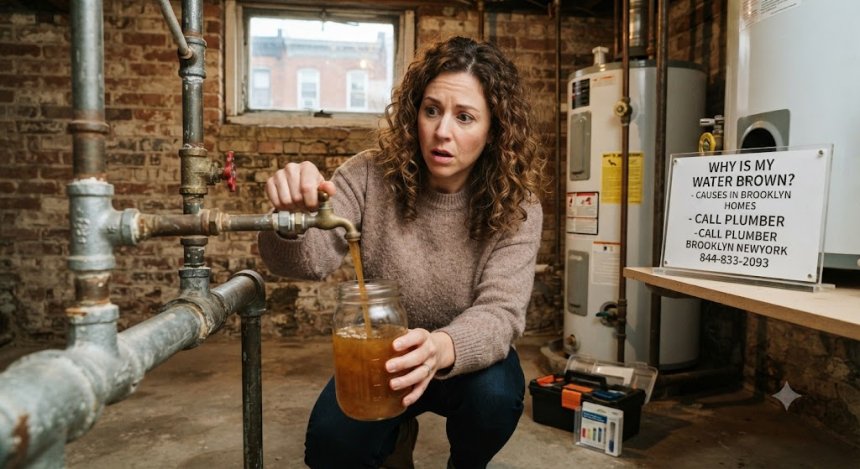
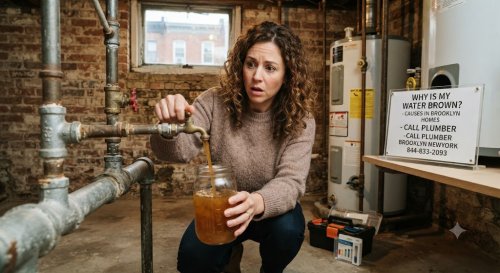
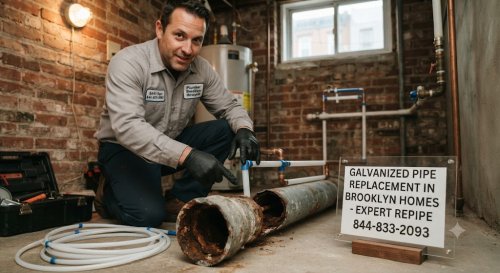
This is one of the most common culprits, especially in pre-war buildings and Brooklyn brownstones. Most brownstones were built in the late 1800s to early 1900s and still contain original galvanized steel pipes . These pipes corrode from the inside over decades, gradually restricting water flow .
Signs it's your pipes:
-
Low pressure throughout the house, not just at one fixture
-
Brownish or discolored water
-
Slow drainage
The fix: Replacing galvanized pipes with copper or PEX is often the most effective long-term solution . This is a major project but dramatically improves water flow and water quality.
2. Clogged Aerators and Showerheads
Before you assume a major plumbing problem, check the simplest cause first. Over time, mineral deposits from NYC's water can clog the small screens (aerators) on faucets and showerheads, restricting water flow . This is often mistaken for a systemic pressure problem.
Signs it's a clogged aerator:
-
Low pressure at only one specific fixture
-
Other fixtures in the home have normal pressure
The fix: Remove the aerator or showerhead, soak it in vinegar to dissolve mineral deposits, scrub it clean, and reinstall . This simple maintenance task can restore full pressure in minutes.
3. Pressure-Reducing Valves (PRVs) Gone Bad
If your water pressure is regulated by a PRV, a failing valve can significantly restrict water flow . NYC Plumbing Code requires that where water pressure exceeds 85 psi static, a pressure-reducing valve must be installed to keep pressure at or below that level .
Signs it's the PRV:
-
Pressure is consistently low throughout the house
-
Pressure fluctuates unpredictably
-
A pressure gauge reading shows below 40 PSI or above 80 PSI
The fix: A licensed plumber can adjust the PRV setting or replace it if it's worn out. NYC DEP specifications require PRVs capable of maintaining downstream pressure between 20 psig to 85 psig with upstream pressure varying up to 175 psig .
4. City Supply or Main Line Issues
Sometimes the problem isn't in your home at all—it's in the city's water mains. Water main repairs, hydrant use, or construction nearby can temporarily reduce pressure . During summer heat waves, illegally opened fire hydrants can cause widespread low pressure across neighborhoods .
An open hydrant without a cap uses about 1,000 gallons of water per minute—compared to just 25 gallons per minute with a sprinkler cap. During heat waves, DEP has reported near-record hydrant use, affecting water pressure and even causing discolored water in homes .
Signs it's a city issue:
-
Pressure dropped suddenly and affects your entire neighborhood
-
Neighbors are reporting the same problem
-
You see open hydrants or construction nearby
The fix: If the issue is on the city side, you'll need to report it. If your plumber confirms the issue is beyond your responsibility, contact NYC DEP or call 311 . If you see an illegally open hydrant, report it immediately to 311 .
5. Leaks in Your Plumbing System
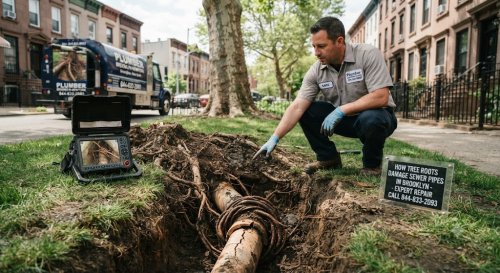
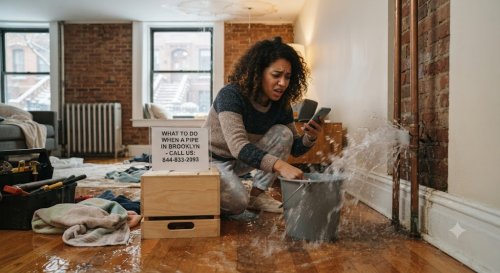
Even small leaks can significantly reduce overall water pressure . Hidden leaks in walls, under floors, or underground are especially problematic because they often go undetected until there's visible damage or a spike in your water bill .
Signs it's a leak:
-
Unexplained increase in your water bill
-
Damp spots, water stains, or mold on walls or floors
-
Sound of running water when all fixtures are off
-
Consistently low pressure throughout the house
The fix: Call a licensed plumber for professional leak detection using acoustic equipment, thermal imaging, or video inspection . Seal even small leaks—they make a big difference in pressure and water costs.
6. Shared Plumbing Lines and Peak Usage
In multi-unit buildings, shared water lines can lead to inconsistent pressure during peak times—mornings and evenings when multiple units are using water simultaneously . This is particularly common in older buildings with undersized supply pipes.
Signs it's shared lines:
-
Pressure drops during specific times of day (morning rush, evening)
-
Pressure returns to normal during off-hours
-
Neighbors in your building report similar issues
The fix: This may require a building-wide solution, such as upgrading the main supply line or installing a booster pump system.
7. Problems with Booster Pumps
In taller buildings, water must be pumped to reach upper floors. If booster pumps aren't working properly, higher floors will experience weak pressure . NYC's gravity-fed water supply struggles to maintain pressure in tall buildings, particularly after the third floor .
Signs it's a pump problem:
-
No water at all—the pump may have stopped working
-
Water turns off suddenly during use—the pump may be overheating and shutting off
-
House-wide pressure decrease, not just at one fixture
The fix: Have a licensed plumber inspect the pump. The NYC Plumbing Code requires that booster pumps be installed with a low-pressure cutoff to prevent creating a vacuum or negative pressure on the suction side .
8. Partially Closed Shut-Off Valves
Sometimes the simplest explanation is the correct one. During construction or repairs, shut-off valves may be partially closed and never fully reopened .
Signs it's a valve issue:
-
Sudden drop in pressure after work was done on the plumbing system
-
Pressure is low but not completely absent
The fix: Locate the main shut-off valve and ensure it's fully open. If you're unsure where it is or how to check, call a plumber.
How to Diagnose Low Water Pressure
Step 1: Check Other Fixtures
Is the issue happening at just one faucet or throughout your entire home? If only one fixture is affected, the problem is likely a clogged aerator or showerhead. If the whole house is affected, it's a systemic issue .
Step 2: Ask Your Neighbors
Contact neighbors in your building or across the street. If they're experiencing similar problems, it could be a building-wide or city-wide issue .
Step 3: Use a Pressure Gauge
Attach a pressure gauge to an outdoor spigot or washing machine line to measure PSI. A reading below 40 PSI confirms low pressure. A reading above 80 PSI indicates high pressure that could damage pipes .
Step 4: Check Visible Pipes
Inspect exposed pipes in basements or utility areas for signs of corrosion, discoloration, or moisture indicating a leak .
Step 5: Check for Sediment
Remove faucet aerators and inspect for mineral buildup. Clean or replace them if clogged .
Professional Solutions for Water Pressure Problems
Repiping
Replacing old galvanized pipes with copper or PEX improves flow and durability . This is the most comprehensive solution for homes with original pre-war plumbing.
Best for: Homes with original pipes from before 1960 showing signs of corrosion and low pressure throughout .
PRV Adjustment or Replacement
Pressure valves need professional setting or replacement if faulty . NYC code requires pressure to be maintained at or below 85 PSI .
Best for: Homes with pressure readings above 80 PSI or below 40 PSI with a known PRV installed.
Booster Pump Installation
Helps low-rise homes or brownstones maintain flow to higher floors . For mid-rises (4-10 floors), multi-stage or VFD pumps ensure greater pressure management. High-rises (10+ floors) require heavy-duty centrifugal pumps .
Best for: Buildings where gravity-fed pressure is insufficient for upper floors .
Leak Repair
Sealing even small leaks can make a big difference in pressure and costs . Professional leak detection can pinpoint the exact location .
Best for: Homes with unexplained high water bills or visible signs of water damage.
Fixture Cleaning
Removing mineral buildup from aerators, showerheads, and cartridges restores water flow at individual fixtures .
Best for: Isolated low pressure at specific faucets or showers.
Who Is Responsible for Water Pressure Problems?
If you own your home: You're responsible for the water and sewer lines from the building to the main line under the street, including any lines that run beneath the sidewalk . If the issue is within your property, you'll need to hire a licensed plumber.
If you rent: Your landlord is typically responsible for maintaining plumbing systems in working order. Notify your building's landlord, managing agent, or superintendent first. If internal attempts fail, consider filing a formal complaint with the appropriate housing department .
If the issue is on the city side: If your plumber confirms the problem lies beyond your responsibility (e.g., city water main), you can escalate it to NYC DEP by calling 311 .
Preventing Low Water Pressure Issues Long-Term
-
Annual Plumbing Inspections help identify buildup or failing valves early
-
Water Filtration or Softeners reduce sediment and scale buildup in pipes
-
Smart Leak Detectors alert you before small problems become expensive emergencies
-
Licensed Work Only—NYC plumbing requires permits and licensed professionals
Frequently Asked Questions
Q1: What is normal water pressure in a NYC home?
Most NYC homes should maintain water pressure between 40 and 60 PSI. Anything below 40 PSI is considered low, while pressure above 80 PSI can be damaging . NYC law requires at least 8 PSI at the highest plumbing fixture, but that's the legal minimum .
Q2: Why does my water pressure drop only during certain times of day?
In multi-unit buildings, shared lines can lead to inconsistent pressure during peak times like mornings or evenings when multiple units are using water simultaneously . If neighbors experience the same issue, it may be a building-wide problem.
Q3: Can open fire hydrants affect my water pressure?
Yes—an open hydrant without a cap uses about 1,000 gallons of water per minute, compared to 25 gallons with a sprinkler cap. During heat waves, DEP has reported near-record hydrant use that causes widespread low pressure and even discolored water . Report illegally open hydrants to 311 .
Q4: How do I know if my low water pressure is caused by old pipes?
Signs include low pressure throughout the house (not just at one fixture), brownish or discolored water, and a home built before 1960 with original galvanized pipes. Replacing old pipes with copper or PEX is the best solution .
Q5: What is a pressure-reducing valve (PRV) and why does it matter?
A PRV regulates water pressure entering your home. NYC code requires PRVs where pressure exceeds 85 PSI static . If a PRV fails, it can significantly restrict water flow. A licensed plumber can adjust or replace it .
Q6: Can a clogged aerator cause low water pressure?
Yes—mineral deposits from NYC's water can clog aerators and showerheads over time, reducing flow at specific fixtures. Remove and soak them in vinegar to dissolve deposits .
Q7: How much does it cost to fix low water pressure in NYC?
Costs vary widely depending on the cause: cleaning aerators is minimal; repiping can cost thousands; booster pump installation ranges from a few thousand to tens of thousands for high-rises. A professional diagnosis is the best first step .
Q8: Who is responsible for water pressure issues in a rental apartment?
Notify your landlord or building management first. If they fail to address the issue, you may need to escalate to the housing department. If the issue is on the city side (beyond your building), contact 311 .
Q9: How can I prevent low water pressure in the future?
Annual plumbing inspections, water filtration or softeners, smart leak detectors, and ensuring licensed plumbing work are all preventive measures .
Q10: What should I do if I suddenly have no water at all?
Check with neighbors to see if it's a building or city-wide issue. If it's only your unit, check the main shut-off valve and contact a licensed plumber immediately .
Get Professional Water Pressure Diagnosis in Brooklyn, NYC
At Plumber in Brooklyn New York City, we specialize in diagnosing and fixing water pressure problems for homeowners throughout the five boroughs. Our licensed plumbers use the latest equipment to identify the root cause—whether it's old pipes, a failing PRV, a hidden leak, or a booster pump issue—and provide effective, long-lasting solutions.
Why Choose Us?
-
Licensed & Insured—Fully compliant with NYC codes
-
24/7 Emergency Service—Available around the clock
-
Upfront Pricing—No hidden fees or surprise charges
-
Experienced Team—Decades of experience with NYC's unique plumbing challenges
-
Specialized Equipment—Pressure testing, leak detection, and more