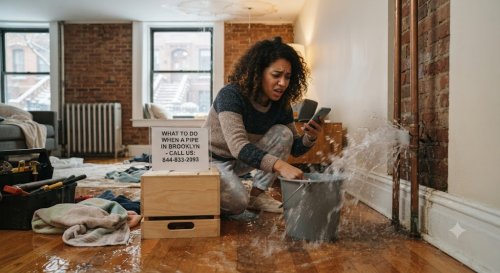
What to Do Immediately After a Pipe Bursts in Your Brooklyn Home
A burst pipe is a Brooklyn homeowner's worst nightmare. Follow these 8 emergency steps to stop the damage fast. Call 844 833 2093 for 24/7 emergency plumbing.
Why Do Pipes Burst in Brooklyn Homes?
Understanding why pipes burst can help you prevent future emergencies, but when you're facing a crisis, the priority is stopping the damage.
The main causes include:
-
Frozen water: When water freezes, it expands by about 9 percent. The pressure inside pipes can spike from 40 psi to an incredible 40,000 psi—no pipe can withstand that. The pipe may break at the frozen point or at a weak spot elsewhere in the line .
-
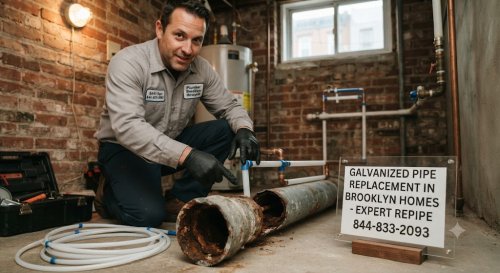
Aging infrastructure: Thousands of Brooklyn homes still have original cast-iron or galvanized pipes from the early 1900s. These corrode and weaken over time .
-
Ground shifting: Brooklyn's varied urban fill and clay soil creates uneven settling that stresses pipe joints .
Step-by-Step Emergency Response
Step 1: Shut Off the Main Water Supply
This is the most critical step. Your first priority is to stop the flow of water .
-
Locate your main shut-off valve—it's typically found in basements, crawl spaces, or near the water meter. In NYC, many shut-offs are in the basement or a utility closet.
-
If your main valve is hard to turn, now is a good time to make sure it works properly (but wait until after the emergency to address that issue).
-
If you live in a multi-unit building, notify building management immediately .
Why this matters: Frozen pipes often burst during thawing. Shutting off the water gives you control if a crack has already formed .
Step 2: Turn Off the Electricity
If water has reached any electrical outlets, appliances, or your electrical panel, shut off power to the affected area .
-
Head to your electrical panel and turn off the circuit breakers for the flooded zones.
-
This step is essential to prevent electrocution or fires.
-
Do not turn power back on until a qualified electrician has inspected the area .
Step 3: Drain Remaining Water
Open faucets to relieve pressure and allow remaining water to drain from the system .
-
Turn on both hot and cold taps at the lowest point in your home.
-
Open all faucets connected to the affected pipes.
-
Flush toilets to help drain the system.
Step 4: Call a Licensed Plumber Immediately
Burst pipes require professional repair. Temporary fixes rarely hold and often fail under pressure .
-
While waiting for the plumber, keep the affected faucets open to relieve pressure.
-
If the plumber is delayed, use a temporary patch only if absolutely necessary:
Step 5: Document the Damage
For insurance purposes, take photos and videos of all affected areas before you start cleaning .
-
Document the source of the leak
-
Photograph damaged belongings, walls, floors, and furniture
-
Keep a record of everything for your insurance claim
"Some people are paralyzed by the event and want everyone to see it before anyone touches anything," said one restoration expert. "Don't do this. Instead, take lots of photos and get a move on" .
Step 6: Begin Water Removal and Cleanup
"With water damage, you need to move fast" . The quicker you remove the water, the less damage to your home's structure and belongings .
-
Use towels, mops, and buckets to soak up standing water
-
Use a wet/dry shop vacuum if available
-
For serious flooding, you may need to hire a water pump or professional extraction service
-
On the 19th floor of an apartment building, even a couple of inches of water is an urgent situation; in a basement with more water, you may have slightly more time
Step 7: Ventilate and Start Drying
To dry the affected area and prevent mold growth :
-
Open windows and doors to create airflow
-
Use fans to circulate air
-
Turn up the thermostat to add warmth
-
Run a dehumidifier to remove moisture
Note: Mold can develop within 48 hours of water exposure , so act quickly.
Step 8: Contact Your Insurance Company
Notify your insurance company about the burst pipe .
-
Provide the documentation you've gathered
-
However, damage from rising flood waters requires a separate flood policy
-
Keep receipts for professional repairs as you may need to provide them
What Not to Do
-
DO NOT use open flames (blowtorches, propane heaters, grills) to thaw pipes. These are extremely dangerous and can cause fires or steam explosions .
-
DO NOT use chemical drain cleaners on frozen or burst pipes—they can damage older plumbing .
-
DO NOT wait to call a plumber. Even small cracks can turn into major leaks .
-
DO NOT turn on electricity in affected areas until inspected by a professional .
-
DO NOT delay water removal—mold can germinate within 48 hours .
Who Is Responsible for Burst Pipes in NYC?
If you own your home: You are responsible for repairs and cleanup costs. Your homeowners' insurance policy likely covers burst pipes, but you'll need to document the damage.
If you rent: Notify your landlord or building management immediately . Under the warranty of habitability, landlords are required to keep plumbing in working order . If the issue affects multiple units, the building management may need to coordinate repairs.
If the issue affects multiple units: Contact your co-op or condo board. In co-ops, the board is responsible for maintaining habitable living conditions .
Preventing Future Burst Pipes
Once the emergency is handled, take these steps to prevent future problems:
-
Insulate exposed pipes in basements, crawl spaces, attics, and along exterior walls
-
Open cabinet doors under sinks to allow warm air circulation
Frequently Asked Questions
Q1: What should I do first if a pipe bursts in my home?
Shut off the main water supply valve immediately. This stops additional water from entering the system and prevents flooding .
Q2: Should I turn off my electricity if a pipe bursts?
Yes—if water has reached electrical outlets, appliances, or your electrical panel, shut off power to the affected area to prevent electrocution .
Q3: What causes pipes to burst in winter?
When water freezes, it expands with tremendous force—pressure inside pipes can spike from 40 psi to 40,000 psi. The pipe breaks where the pressure finds a weak spot .
Q4: Can I repair a burst pipe myself?
Unless you're experienced with plumbing repairs, we strongly recommend calling a licensed plumber. Temporary fixes rarely hold and often fail under pressure .
Q5: Will my insurance cover a burst pipe?
Most standard homeowners' policies cover water damage from a "sudden and accidental" pipe burst. However, damage from rising flood waters requires a separate flood policy .
Q6: Is a burst pipe a plumbing emergency?
Yes. A burst or actively flooding pipe is considered a true emergency that requires immediate professional attention .
Q7: How do I find my main water shut-off valve?
In Brooklyn homes, the main valve is typically located in the basement, near the water meter, or in a utility closet. In older buildings, it may be near the front of the property. Take time to locate it before an emergency .
Q8: How can I thaw a frozen pipe safely?
Use a hair dryer, heating pad, warm towels, or a portable space heater at a safe distance. Start near the faucet and work toward the frozen area. Never use open flames .
Get Professional Emergency Plumbing in Brooklyn, NYC
At Plumber in Brooklyn New York City, we understand the urgency of a burst pipe. Our licensed plumbers are available 24/7/365 for emergency service and can typically reach Brooklyn neighborhoods quickly from our Williamsburg base .