Find Hidden Water Leaks Behind Walls in Brooklyn
Learn how to find hidden water leaks behind walls in your Brooklyn home. Discover warning signs, causes, professional repair, and expert tips.

How to Find a Hidden Water Leak Behind Walls in a Brooklyn Home
Discovering that your home has a water leak is stressful enough, but realizing that water is quietly escaping behind your walls can induce pure panic. For homeowners and business owners across Brooklyn, Kings County, and neighboring areas like Williamsburg, Greenpoint, and DUMBO, hidden pipe leaks are a silent threat. Whether you reside in a historic brick townhouse or a modern condominium, water supply lines and drainage stacks run extensively through wall cavities, floors, and ceilings.
People search for this topic when they notice inexplicable jumps in their utility bills, strange damp spots, or musty odors without an obvious source. Finding a hidden leak before it causes catastrophic structural rot or toxic mold growth requires knowing what to look for and when to call a professional plumbing expert.
What Is a Hidden Water Leak?
A hidden water leak refers to any continuous or intermittent escape of water from pressurized supply lines, waste stacks, or heating pipes that occurs behind finished walls, beneath concrete slabs, or above ceilings, keeping the damage out of plain sight.
Common Situations
-
Water slowly weeping from a corroded copper pipe joint inside a plastered wall cavity, dampening drywall over several weeks.
-
A pinhole leak spraying a fine mist against wooden studs every time a bathroom upstairs is used.
-
Cracks in vintage cast-iron waste stacks leaking greywater inside interior partition walls during heavy drainage.
-
Condensation or weeping connections on supply lines running through tightly sealed utility chases.
Why Does This Plumbing Problem Happen?
Hidden leaks do not occur overnight; they are typically the result of long-term structural wear, material degradation, or environmental factors.
-
Aging Pipes and Corrosion: Older galvanized steel and copper pipes thin out over decades as water chemistry breaks down internal metal walls until pinholes form.
-
High Water Pressure: Excessive municipal water pressure places continuous, punishing stress on pipe fittings, elbow joints, and soldered connections behind walls.
-
Hard Water Mineral Buildup: Hard water deposits mineral scale inside pipes, altering flow dynamics and accelerating localized metal corrosion.
-
Improper Installation or Shifting: Poorly supported pipes that rub against wooden framing or concrete, combined with seasonal temperature changes causing thermal expansion and contraction, lead to joint stress.
-
Nail or Screw Punctures: Previous remodeling projects where a drywall screw or picture hanger accidentally pierced a hidden water line.
Signs You Should Never Ignore
Because the leak itself is hidden, your home will display subtle symptoms indicating that moisture is accumulating where it shouldn't be. Keep watch for these warning signs:
-
Unexplained Spikes in Your Water Bill: If your water usage patterns remain identical but your utility bill climbs significantly, water is likely escaping somewhere in your system.
-
Warped or Bubbling Drywall: Paint that peels, bubbles, or buckles, or wallpaper that loosens from the wall surface points to trapped moisture behind the material.
-
Musty, Earthy Odors: A persistent damp smell in a hallway or room often signals hidden mold colonies thriving inside a dark wall cavity.
-
The Sound of Running Water: Hearing a faint hissing or trickling sound inside walls when all taps and appliances are completely turned off.
-
Warm Spots on Floors or Walls: A hot water supply line leaking behind a wall or beneath a floor can create a distinct warm patch on the surface.
Common Plumbing Problems Related to This Issue
Allowing a hidden leak to persist untreated triggers a cascade of severe property complications:
-
Structural Rot: Water soaking wooden wall studs, floor joists, and subflooring compromises the load-bearing integrity of your home.
-
Extensive Mold Growth: Toxic mold spores multiply rapidly inside humid, dark wall voids within 24 to 48 hours.
-
Electrical Hazards: Leaking water intersecting with hidden electrical wiring creates short circuits or severe fire hazards.
-
Foundation Undermining: Major leaks near ground-level framing can erode soil and destabilize foundation footings.
Step-by-Step Professional Repair Process
When you bring in a licensed specialist from Plumber Brooklyn Newyork to locate and fix a hidden wall leak, our technicians execute a precise, methodical process:
-
Initial Visual and Meter Inspection: The plumber reviews your water meter readings and inspects the entire property for physical symptoms of moisture.
-
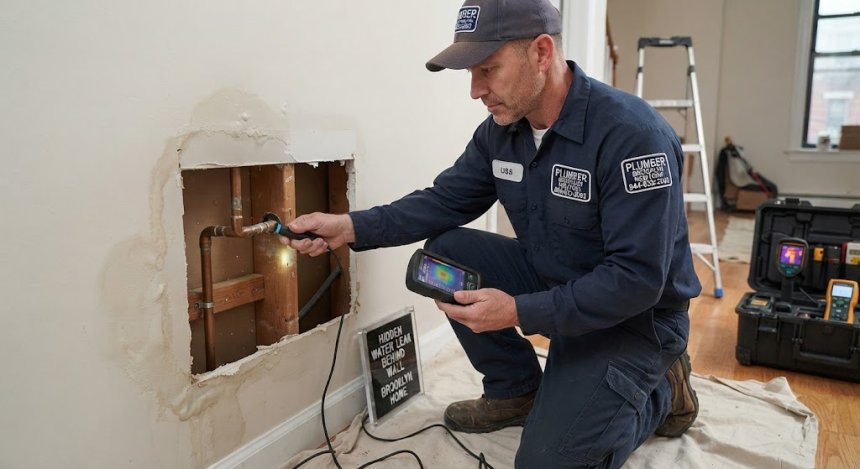
Advanced Diagnostic Scoping: Using acoustic listening devices, thermal imaging cameras, and moisture meters, technicians map out the exact location of the leak without tearing down entire walls.
-
Transparent Estimate: You receive a clear, upfront breakdown of the recommended repair strategy, parts, and labor costs before any destructive work begins.
-
Targeted Access and Repair: Professionals open a minimal, precise section of the wall to expose the leaking pipe, then perform durable repairs or replace the damaged pipe section.
-
Rigorous System Testing: The plumbing system is re-pressurized and monitored to verify that the leak is completely resolved.
-
Jobsite Cleanup: The work zone is tidied and sanitized, leaving your home clean and orderly.
-
Maintenance Advice: The plumber offers valuable guidance on preventing future leaks and monitoring system health.
Can You Fix It Yourself?
While locating and repairing a leak inside a wall requires advanced professional tools, homeowners can perform crucial preliminary checks:
-
Safe DIY Solutions: Conducting the "Water Meter Test"—ensure all taps and appliances are off, check your water meter dial, wait two hours without using water, and check the meter again to see if it moved.
-
Temporary Fixes: Shutting off your home’s main water valve immediately if a hidden leak suddenly bursts through a wall, minimizing active flooding.
-
When DIY Becomes Dangerous: Attempting to punch holes blindly into walls with a hammer, hacking into drywall near electrical outlets, or trying to solder pressurized lines without proper training.
-
When Professional Plumbing is Necessary: Whenever you detect hidden moisture behind walls, hear running water inside cavities, or notice unexplained utility bill increases.
Tools Professionals Use
Modern non-invasive technology allows plumbers to find hidden leaks with pinpoint accuracy:
-
Acoustic Leak Detectors: High-sensitivity ground and wall microphones that amplify the distinct sound of water hissing or escaping from a pressurized pipe.
-
Thermal Imaging Infrared Cameras: Detect temperature variations on wall surfaces caused by moisture pooling behind drywall or insulation.
-
Pinpoint Moisture Meters: Measure the exact percentage of water saturation in wood, drywall, and masonry without surface damage.
-
Pipe Inspection Cameras: Flexible fiber-optic scopes threaded into wall access points or drain runs to visually inspect pipe interiors.
How Long Does the Repair Usually Take?
Timelines for diagnosing and repairing hidden wall leaks depend on the complexity of the job:
-
Diagnostic Leak Detection: 1 to 2 hours to locate the exact source using electronic tools.
-
Minor Repairs (e.g., fixing an accessible joint or pinhole leak behind a small wall cut): 2 to 4 hours.
-
Major Repairs (e.g., replacing a long run of corroded wall piping across multiple rooms): 1 to 2 days.
-
Factors Affecting Time: Pipe accessibility, wall construction material (plaster vs. modern drywall), and whether structural framing requires reinforcement.
Cost Factors for Hidden Leak Repairs
Plumbing leak detection and repair costs depend on several variables. Estimates are tailored to your property:
-
Difficulty and time required to locate the hidden leak.
-
Accessibility of the pipe behind finished walls, tile, or built-in cabinetry.
-
Materials needed (e.g., modern PEX vs. traditional copper piping).
-
Emergency service dispatch timing (after-hours, weekends, or holidays).
-
Property type (historic brownstone, multi-family apartment building, or single-family home).
-
Local labor rates and permit fees if extensive structural plumbing modifications are mandated.
Hidden Truths Homeowners Should Know
-
A tiny pinhole leak behind a wall can waste hundreds of gallons of water a week while quietly rotting out structural support beams.
-
Standard homeowner insurance policies frequently deny claims if water damage is proven to stem from long-term, neglected plumbing maintenance issues.
-
Retail chemical leak-sealing liquids do not work on pressurized supply lines behind walls and can cause severe system damage.
-
Mold begins colonizing organic building materials within 24 to 48 hours of constant moisture exposure, making prompt detection vital.
-
Annual plumbing inspections and pressure checks save property owners thousands of dollars in emergency tear-out and restoration costs.
15 Common Mistakes Homeowners Make
-
Ignoring minor musty odors or damp spots, assuming they will dry out on their own.
-
Failing to check the water meter when suspecting an invisible leak.
-
Waiting until water stains emerge on ceilings before investigating.
-
Hiring unlicensed handymen who lack professional acoustic and thermal detection gear.
-
Skipping regular home plumbing checkups and pressure tests.
-
Using temporary tape or patches on pressurized supply lines inside wall cavities.
-
Over-tightening fittings during amateur plumbing attempts, creating new leak points.
-
Not knowing the location of the main water shut-off valve to stop emergencies fast.
-
Assuming a low water bill rules out hidden leaks.
-
Painting over water stains on walls without addressing the underlying pipe leak.
-
Using incorrect pipe materials that accelerate galvanic corrosion inside walls.
-
Neglecting to test home water pressure levels, risking high-pressure stress on pipe joints.
-
Ignoring slow-draining fixtures that may indicate an adjacent leaking waste stack.
-
Trying to locate leaks by randomly cutting holes in expensive plaster or tile work.
-
Failing to dry out wall cavities thoroughly after a repair, inviting hidden mold growth.
Maintenance Tips to Protect Your Property
-
Perform a monthly water meter check by making sure no water is running and watching for dial movement.
-
Inspect visible pipe runs in your basement, utility room, and under sinks twice a year for signs of corrosion or dampness.
-
Test your home's water pressure regularly; install a pressure-reducing valve if readings exceed 80 psi to protect wall pipes.
-
Know the exact location of your main water shut-off valve and ensure every adult in the house can operate it.
-
Insulate water supply lines running through exterior or unheated wall cavities to prevent freezing and stress.
-
Schedule an annual comprehensive plumbing inspection with a licensed professional.
-
Monitor your water bills monthly for unexpected, unexplained increases in consumption.
-
Check bathroom and kitchen tile grout annually to prevent surface moisture from seeping into wall structures.
-
Replace flexible braided supply hoses beneath sinks and toilets every five to seven years.
-
Keep emergency contact numbers for a trusted local plumber saved in your mobile phone.
-
Avoid hanging heavy shelving or drilling into walls directly over known plumbing lines.
-
Listen closely for unusual hissing sounds in walls during quiet morning hours.
-
Check your water heater for signs of weeping tanks or leaking temperature-relief valves.
-
Keep your gutters clean to prevent exterior roof water from running down and infiltrating brick wall cavities.
-
Address minor plumbing drips immediately before they escalate into major wall leaks.
When Should You Call an Emergency Plumber?
Certain situations involving hidden leaks demand immediate professional intervention:
-
Burst Supply Line Inside a Wall: Water is actively soaking drywall, pooling on floors, or shorting out electrical switches.
-
Sudden Major Pressure Drops: A major underground or in-wall pipe rupture has occurred, cutting off normal water flow.
-
Ceiling Collapse Risk: A hidden ceiling or wall leak has saturated structural drywall to the point of imminent collapse.
-
Foul Odors or Sewage Leaks: A hidden waste stack has cracked, releasing raw sewage into wall voids.
Frequently Asked Questions
Why is my water pressure suddenly low along with a rising water bill?
A sudden pressure drop paired with high water usage is the classic fingerprint of a major hidden pipe leak running continuously inside your walls or slab.
How much does professional leak detection cost?
Diagnostic fees vary depending on the size of the property and the advanced electronic acoustic or thermal imaging equipment required. Contact us directly for transparent pricing.
Can a hidden wall leak damage my home's electrical system?
Yes. If leaking water travels along framing and intersects with electrical wiring, it creates severe short-circuit and fire risks.
Is thermal imaging accurate for finding in-wall pipe leaks?
Yes. Infrared cameras detect temperature differences on wall surfaces caused by warm or cool water escaping from pipes behind drywall, providing exceptional accuracy.
How do I know if a leak is behind my wall or under the floor?
Professional acoustic detection equipment allows plumbers to isolate sound frequencies and determine whether the leak is traveling down a vertical wall or across a horizontal floor slab.
How long do copper supply pipes last before developing pinholes?
While copper can last several decades, aggressive water chemistry, high velocity, or stray electrical currents can cause pinhole leaks within 20 to 30 years.
Why do pipes leak inside walls without warning?
Internal corrosion, manufacturing defects, joint fatigue from thermal expansion, or accidental nail punctures during home remodeling cause unannounced wall leaks.
Can plumbing leaks significantly increase my home insurance rates?
Unaddressed long-term leaks that cause extensive structural rot or mold may lead insurance companies to deny coverage or raise premiums due to neglect.