How Long Do Plumbing Pipes Last in Brooklyn's Older Buildings
Learn the lifespan of plumbing pipes in older Brooklyn brownstones and pre-war buildings. Discover signs of pipe failure, causes, and replacement options.
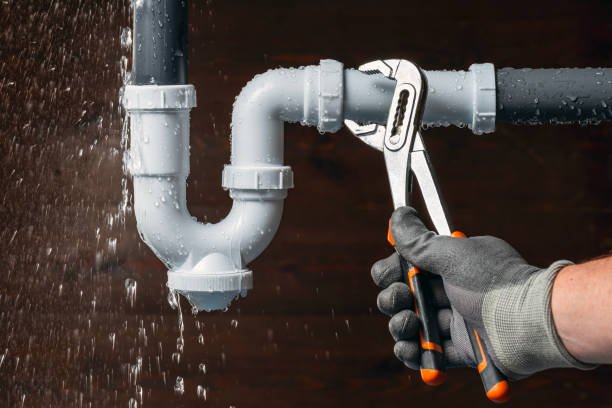
How Long Do Plumbing Pipes Last in Brooklyn's Older Buildings?
Brooklyn's residential architecture is iconic. From the classic 19th-century brownstones lined along Bedford-Stuyvesant and Park Slope to the pre-war apartment buildings of Brooklyn Heights, these structures carry rich history, unique craftsmanship, and unquestionable charm. However, behind those exposed brick walls and beneath those restored hardwood floors lies a complex, decades-old network of plumbing pipes that often gets overlooked—until a major leak occurs.
If you own or manage an older property in Brooklyn, one of the most critical questions you can ask is: How long do plumbing pipes last in Brooklyn's older buildings?
Unlike modern suburban developments built with PVC and PEX materials, Brooklyn’s historic housing stock contains a layered history of plumbing technology. It is common to find 80-year-old galvanized iron running alongside 100-year-old cast iron, early 20th-century lead lines, and mid-century copper retrofits.
Understanding the life expectancy of these materials—and recognizing when they are on the brink of failure—can save you tens of thousands of dollars in water damage, structural repairs, and emergency plumbing costs. In this guide, we break down everything you need to know about the lifespan of plumbing pipes in older Brooklyn properties, the signs of pipe failure, the professional replacement process, and how to maintain your system safely.
What Is the Lifespan of Plumbing Pipes in Older Brooklyn Buildings?
To understand how long your plumbing will last, you first need to identify what material was used during your building’s construction or last major overhaul. Brooklyn experienced major building booms between the late 1800s and the 1940s. During these eras, pipe materials were selected based on availability and manufacturing standards of the time, not necessarily multi-generational longevity.
Here is a clear breakdown of the average lifespan of common piping materials found across historic Brooklyn properties:
| Pipe Material | Common Era of Installation | Average Lifespan | Common Uses in Brooklyn | Risk Factor in Older Buildings |
| Galvanized Steel | 1880s – 1960s | 40 – 50 Years | Water Supply Lines | High: Corrodes internally, restricts water flow, releases rust. |
| Cast Iron | 1800s – 1970s | 75 – 100 Years | Waste & Drain Stack Lines | Medium to High: Flakes, cracks, rusts along the bottom of horizontal runs. |
| Brass (Red or Yellow) | 1900s – 1950s | 40 – 70 Years | Supply Lines & Shutoffs | Moderate: High zinc content leads to dezincification and cracking. |
| Copper | 1950s – Present | 50 – 70+ Years | Hot & Cold Water Supply | Low to Moderate: Vulnerable to acidic water, pinhole leaks, and stray current corrosion. |
| Lead | Pre-1930s | 100+ Years | Main Service Lines (Street to Meter) | Severe Health Hazard: Leaches lead into drinking water; needs immediate replacement. |
| Clay Tile | 1800s – 1960s | 50 – 60 Years | Main Underground Sewer Lines | High: Highly susceptible to tree root intrusion and soil shifting. |
| PVC / ABS Plastic | 1970s – Present | 50 – 100 Years | Drain, Waste, and Vent (DWV) | Low: Modern standard, non-corrosive, though restricted by NYC Fire Codes in some applications. |
If your Brooklyn building was constructed before 1970 and has never undergone a full building repiping, your pipes are likely approaching or have already surpassed their intended operational lifespan.
Why Do Plumbing Pipes Fail in Older Brooklyn Properties?
Plumbing pipes do not last forever. In historic Brooklyn neighborhoods—such as Crown Heights, Cobble Hill, Bushwick, and Williamsburg—several local factors accelerate the degradation of indoor and underground plumbing networks.
       FACTORS ACCELERATING PIPE FAILURE IN BROOKLYN
  ┌─────────────────────────────────────────────────────────┐
  │                                                         │
  │  1. Chemical Corrosion (Internal Rust & Mineral Scale)  │
  │  2. Historic Building Settling & Ground Shifting       │
  │  3. Harsh NYC Winter Freeze/Thaw Cycles                │
  │  4. Tree Root Intrusion (Oak & Maple Roots)            │
  │  5. Electrolysis & Stray Electrical Currents           │
  │  6. Decades of Chemical Drain Cleaner Usage            │
  │                                                         │
  └─────────────────────────────────────────────────────────┘
1. Internal Corrosion and Mineral Scaling
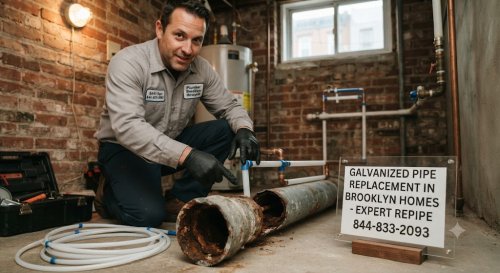
Water is a natural solvent. Over decades, the continuous flow of water through metal pipes causes internal oxidation. Galvanized steel pipes, for instance, are coated with zinc to prevent rust. Once that zinc layer erodes, the iron reacts with oxygen in the water, creating internal rust buildup known as "tuberculation." This layer narrows the interior diameter of the pipe, reducing water volume and causing pinhole leaks from the inside out.
2. Settling Foundations and Structural Shifting
Brooklyn’s historic brownstones rest on earth that has shifted over a century. Vibrations from nearby subway lines (such as the F, G, 2, 3, N, and R trains), heavy street traffic, and natural foundation settling place immense structural stress on rigid cast iron and clay sewer pipes. This constant micro-movement leads to cracked joints, sheared waste stacks, and belly drops in main sewer lines.
3. Harsh NYC Winter Freeze-Thaw Cycles
Brooklyn winters regularly bring freezing temperatures. Uninsulated pipes running through unheated crawlspaces, drafty basements, or along exterior brick walls are vulnerable to freezing. When water freezes, it expands by roughly 9%. In aging, brittle metal pipes, this expansion causes longitudinal cracks that burst wide open once the temperature thaws.
4. Tree Root Intrusion
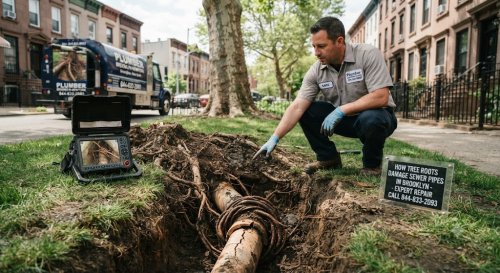
Tree-lined streets are part of Brooklyn's charm, but the root systems of mature oak, maple, and plane trees actively search for moisture. Older clay tile and cast iron sewer pipes were joined using mortar or lead seals. As these joints weather, tiny gaps open up, letting tree roots enter, expand, and block or shatter the pipe entirely.
5. Electrolysis (Stray Current Corrosion)
In older multi-family structures and row houses, electrical systems were historically grounded to metallic water pipes. Stray electrical currents passing through copper or galvanized lines cause a chemical reaction called electrolysis, which rapidly strips metal ions from the pipe walls, causing unexplained pinhole leaks in otherwise functional copper pipes.
Warning Signs Your Aging Pipes Need Attention
You do not have to wait for a pipe to burst to know your plumbing system is failing. Older pipes give clear warnings when they are reaching the end of their service life. If you notice any of the following signs in your home or building, schedule a professional inspection immediately.
1. Discolored or Rusty Water
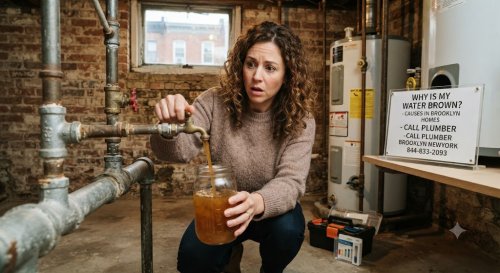
If your tap water comes out brown, yellow, or reddish—especially first thing in the morning—it is a direct indication that galvanized steel or iron pipes are rusting internally. As the interior of the pipe disintegrates, flake rust mixes with your drinking water.
2. Persistent Low Water Pressure
If taking a shower feels like a trickle, or if water pressure drops dramatically when someone runs the kitchen faucet, internal mineral build-up or heavy corrosion is restricting water flow inside your supply lines.
3. Frequent or Recurring Clogs
If toilet drains, kitchen sinks, or shower basins back up regularly despite hydro-jetting or snaking, your waste line may be cracking, rusting shut, or compromised by tree root intrusion. Cast iron pipes often build up a rough inner crust that catches toilet paper and debris.
4. Mysterious Water Stains and Damp Spots
Yellowish circles or flaking paint on ceilings, damp plaster walls, and warped flooring in brownstones are telltale signs of slow, hidden pipe leaks behind walls.
5. Foul Drain Odors (Sewer Gas)
A healthy plumbing system keeps sewer gases contained. If you smell rotten eggs or raw sewage in your basement or near floor drains, your cast iron drain vent pipes may have developed cracks or rust holes, allowing sewer gas to leak into your living space.
6. Rattling, Banging, or Clicking Noises
Whistling, high-pitched squealing, or loud banging (water hammer) when faucets are turned off indicates loose, aging pipes, failing pressure-reducing valves, or severe internal narrowing.
7. Unexplained Spikes in Water Bills
If your NYC Department of Environmental Protection (DEP) water bill shoots up suddenly without an increase in household usage, water is likely escaping through a underground leak or hidden break in your main service line.
Common Plumbing Problems in Historic Brooklyn Properties
Living in a 100-year-old building comes with unique architectural and mechanical quirks. Below are the most frequent issues caused by aging pipe networks across Brooklyn:
               COMMON BROOKLYN PLUMBING ISSUES
 ┌─────────────────────────────────────────────────────────────┐
 │                                                             │
 │  [Galvanized Supply]  ──>  Restricted Flow & Brown Water   │
 │  [Cast Iron Stacks]   ──>  Bottom-Line Rust Cracks & Leaks  │
 │  [Lead Main Lines]    ──>  Health Risks & Lead Contamination│
 │  [Clay Sewer Pipes]   ──>  Root Infiltration & Collapse     │
 │                                                             │
 └─────────────────────────────────────────────────────────────┘
-
Lead Main Service Lines: Thousands of homes built before 1930 in neighborhoods like Greenpoint, Bay Ridge, and Flatbush still connect to municipal water mains via lead service pipes. Lead poses serious health risks and must be replaced with modern copper lines.
-
Corroded Waste Stacks: In multi-family row houses, vertical cast iron stack lines run from the roof down to the basement. Over 80 to 100 years, wastewater acid erodes the bottom channel of these horizontal runs, causing leaks into basement apartments or foundation slabs.
-
Freeze-Damaged Outdoor Lines: Brownstone garden-level kitchens and outdoor hose bibs often sit close to exterior brickwork without adequate insulation, leading to seasonal freeze leaks.
-
Shared Party Wall Plumbing: Many historic Brooklyn row houses share party walls containing common plumbing runs. A leak in your neighbor’s aging galvanized line can quickly migrate into your floor joists and plaster.
Step-by-Step Professional Pipe Inspection and Repair Process
Replacing or repairing plumbing in an older Brooklyn structure requires precise technique to preserve historic plaster, trim, and structural integrity. Here is how a licensed plumbing company handles aging pipe systems:
                          PROFESSIONAL REPAIR PROCESS
 ┌──────────────┐     ┌──────────────┐     ┌──────────────┐     ┌──────────────┐
 │  Step 1:     │ ──> │  Step 2:     │ ──> │  Step 3:     │ ──> │  Step 4:     │
 │  Video       │     │  Pressure &  │     │  Detailed    │     │  Surgical    │
 │  Inspection  │     │  Leak Testing│     │  Estimate    │     │  Execution   │
 └──────────────┘     └──────────────┘     └──────────────┘     └──────────────┘
                                                                       │
 ┌──────────────┐     ┌──────────────┐     ┌──────────────┐            │
 │  Step 7:     │ <── │  Step 6:     │ <── │  Step 5:     │ <──────────┘
 │  Prevention  │     │  System      │     │  NYC DEP     │
 │  Advice      │     │  Testing     │     │  Permits     │
 └──────────────┘     └──────────────┘     └──────────────┘
Step 1: High-Definition Video Camera Inspection
Plumbers insert a waterproof, high-resolution camera directly into your main drain or sewer access point. This live feed reveals the exact condition of the interior pipe walls, pinpoints root intrusion, and detects cracks without opening up walls or excavating gardens.
Step 2: Diagnostic Pressure and Leak Testing
Hydrostatic and digital pressure tests are performed on water supply lines to verify system integrity and locate hidden pressure drops that signal subtle wall leaks.
Step 3: Transparent, Itemized Estimate
The plumber provides an upfront scope of work, detailing whether localized section repairs (spot repairs) or a complete building repiping is required.
Step 4: Surgical Installation and Wall Preservation
In historic buildings, experienced plumbers avoid destructive wall tearing whenever possible. They utilize existing pipe chases, floor cavities, and access panels to thread flexible PEX or rigid copper pipes with minimal disruption to plasterwork.
Step 5: Permitting and Compliance
For major repiping or main service line replacements, licensed master plumbers pull necessary permits from the NYC Department of Buildings (DOB) and coordinate inspections with the NYC DEP.
Step 6: System Testing and Pressure Balancing
Once installed, the new pipe network is pressure-tested under full load, flushed of air and debris, and checked for balanced hot and cold water pressure across all fixtures.
Step 7: Post-Job Cleanup and Maintenance Plan
The team clears away job site debris and delivers a customized preventive maintenance guide tailored to your building's new plumbing configuration.
Can You Fix Aging Plumbing Pipes Yourself?
When dealing with simple modern plumbing fixture swaps, handy homeowners can handle minor tasks. However, DIY repairs on aging, corroded pipes in older Brooklyn buildings carry high financial and structural risks.
                       DIY vs. PROFESSIONAL REPAIR
 ┌──────────────────────────────────┬──────────────────────────────────┐
 │ SAFE FOR DIY (Minor Tasks)       │ DANGEROUS FOR DIY (Call Master)  │
 ├──────────────────────────────────┼──────────────────────────────────┤
 │ • Replacing faucet washers       │ • Unthreading galvanized fittings│
 │ • Installing showerheads         │ • Snaking old cast iron lines    │
 │ • Clearing surface sink clogs    │ • Using acid drain cleaners      │
 │ • Insulating exposed pipes       │ • Soldering near historic wood   │
 │ • Replacing toilet flappers      │ • Replacing main service lines   │
 └──────────────────────────────────┴──────────────────────────────────┘
Safe DIY Measures
-
Temporary Clamp Repairs: Using a rubber pipe sleeve and hose clamps to temporarily slow a pinhole leak until a plumber arrives.
-
Surface Clog Removal: Clearing hair or soap scum from drain traps using a manual hand plunger or plastic drain snake.
-
Pipe Insulation: Wrapping foam sleeves around exposed hot water pipes in unheated basements.
When DIY Becomes Dangerous
-
Unthreading Galvanized Pipe: Attempting to unscrew an old galvanized pipe fitting often snaps the pipe off inside the wall, turning a tiny drip into a flooded room.
-
Chemical Drain Cleaners: Pouring harsh caustic drain chemicals down older cast iron or lead pipes causes chemical burns on fragile pipe walls, accelerating structural failure.
-
Open Flame Soldering: Using a propane torch to solder copper pipes near dry, 100-year-old wood framing inside brownstone walls creates an extreme fire risk.
Specialized Tools Professionals Use for Historic Plumbing
Modern technology enables plumbers to diagnose and repair historic pipe systems quickly, accurately, and non-destructively:
-
Sewer Inspection Cameras: Self-leveling digital cameras equipped with radio transmitters pinpoint pipe damage depth and location down to the inch.
-
Acoustic and Thermal Leak Detectors: Ultrasonic equipment and thermal imaging cameras "listen" through concrete and plaster to locate subterranean and in-wall water leaks without cutting holes.
-
Hydro-Jetting Equipment: High-pressure water jetting units (operating up to 4,000 PSI) blast away decades of grease, scale, and mineral deposits from cast iron drains without damaging pipe walls.
-
Pipe Locators: Electromagnetic locating wands trace underground pipe runs beneath historic bluestone pavers or basement slabs.
-
Trenchless Pipe Lining (CIPP): Epoxy-infused liner sleeves are pulled into damaged sewer pipes and cured in place, creating a seamless "pipe-within-a-pipe" without destroying historic landscaping or sidewalks.
Repair Timelines for Older Pipe Systems
The duration of a plumbing repair depends on the scope of the project, accessibility, and whether emergency protocols apply:
-
Minor Sectional Repair (1 – 3 Hours): Replacing a corroded valve, repairing an exposed copper joint, or replacing an under-sink trap.
-
Localized Drain or Stack Repair (1 – 2 Days): Cutting out and replacing a damaged 10-foot section of cast iron waste stack with modern cast iron or PVC.
-
Main Sewer Line Replacement (1 – 3 Days): Excavating and replacing underground sewer lines from house to street, including NYC DEP street permits and inspections.
-
Complete Brownstone Repiping (5 – 10 Days): Comprehensive replacement of all water supply lines, waste stacks, and fixture branch lines across a multi-story home.
Cost Factors in Brooklyn Plumbing Projects
Plumbing repair and repiping costs vary depending on the severity of the problem, pipe accessibility, materials required, emergency service needs, property type, and local labor rates.
Key factors that influence overall project costs include:
-
Accessibility: Pipes hidden behind original plaster walls, historic wood wainscoting, or buried beneath thick basement concrete slabs require specialized labor to access and restore.
-
Material Selection: Type L copper and commercial-grade cast iron carry higher material costs than PEX or standard PVC, but offer superior durability and noise attenuation.
-
NYC Permitting Fees: Main service line replacements and structural alterations require NYC Department of Buildings (DOB) and Department of Environmental Protection (DEP) permits and street-opening bond fees.
-
Emergency vs. Scheduled Service: Emergency service calls outside standard business hours carry premium labor rates due to rapid deployment needs.
-
Property Scale: Single-family brownstones require different material volumes and layout planning than 6-unit pre-war apartment buildings.
Hidden Truths Every Brooklyn Homeowner Should Know
As an owner or buyer of an older Brooklyn property, keeping these practical realities in mind can save you from unexpected expenses:
-
Small Leaks Create Massive Structural Damage: A slow, 1-drop-per-minute leak inside a wall joist rots historic timber framing and plaster ceilings long before water stains appear on paint.
-
Cheap Temporary Fixes Cost More Long-Term: Quick-fix rubber wraps and epoxy putties are designed for emergency containment, not long-term repair. They eventually fail, often causing larger floods.
-
Homeowners Insurance May Deny Claims for Neglect: Insurance policies generally cover sudden and accidental discharge of water, but routinely deny claims caused by gradual wear, corrosion, or long-term unaddressed leaks in aging pipe networks.
-
Tree Roots Will Return Until the Pipe Is Sealed: Snaking a root-infested clay sewer pipe clears the blockage temporarily, but roots will regrow through the same open joints within months unless the line is relined or replaced.
-
Hard Water Accelerates Equipment Wear: While NYC water is relatively soft compared to other regions, mineral buildup in older steel pipes speeds up tank corrosion in water heaters, cutting their lifespan from 10 years down to 6.
-
DIY Mistakes Cause Catastrophic Flooding: Stripping threads on an ancient brass shut-off valve can immediately flood lower floors, resulting in thousands of dollars in water damage restoration costs.
-
Unaddressed Leaks Skyrocket Water Bills: A running toilet or concealed pipe pinhole leak can waste over 200 gallons of water a day, adding hundreds of dollars to your quarterly NYC water bill.
-
Mold Develops in 24 to 48 Hours: Damp, unventilated cavities behind brownstone plaster provide prime breeding ground for toxic black mold whenever a hidden pipe leaks.
-
Annual Preventative Maintenance Saves Thousands: A yearly inspection by a licensed plumber catches microscopic drips, valve degradation, and minor stack cracks before they evolve into multi-floor emergencies.
15 Common Plumbing Mistakes to Avoid in Older Homes
                       15 PLUMBING MISTAKES TO AVOID
 ┌───────────────────────────────────────────────────────────────────┐
 │                                                                   │
 │  1. Ignoring Low Water Pressure    9. Hanging Heavy Items on Pipes│
 │  2. Chemical Drain Cleaners       10. Skipping Annual Inspections │
 │  3. Flushing "Flushable" Wipes    11. Leaving Hose Lines Hooked Up│
 │  4. Pouring Cooking Grease Down   12. Over-Tightening Fittings    │
 │  5. Hiring Unlicensed Contractors 13. Painting Over Corroded Pipes│
 │  6. Ignoring Water Heater Scale   14. Using Incompatible Metals   │
 │  7. Waiting for Complete Failure  15. Concealing Leaks Without    │
 │  8. Closing Valves Aggressively       Fixing Root Causes          │
 │                                                                   │
 └───────────────────────────────────────────────────────────────────┘
-
Ignoring Low Water Pressure: Treating low pressure as a minor inconvenience rather than an early warning of corroded, narrowing supply pipes.
-
Using Caustic Chemical Drain Cleaners: Pouring harsh chemicals down slow drains damages old cast iron and thin-walled brass traps.
-
Flushing So-Called "Flushable" Wipes: Synthetic wipes do not disintegrate like toilet paper. They snag on rough cast iron pipe interiors, forming major blockages.
-
Pouring Fats, Oils, and Grease (FOG) Down Sinks: Liquid grease hardens inside cool cast iron basement lines, trapping food particles and choking off drainage.
-
Hiring Unlicensed or Uninsured Handymen: Non-licensed contractors lack master plumbing credentials, insurance protection, and knowledge of strict NYC plumbing codes.
-
Skipping Water Heater Flushing: Allowing sediment to accumulate in water heater tanks accelerates bottom-tank rust and lowers energy efficiency.
-
Waiting for Total System Collapse: Postponing pipe replacements until multiple burst pipes occur increases restoration costs exponentially.
-
Cranking Valve Handles Too Tightly: Over-tightening ancient multi-turn shut-off valves strips internal stem threads or crushes rubber seats, causing permanent drips.
-
Hanging Items on Exposed Basement Pipes: Using overhead galvanized or copper supply lines as clothes-drying racks or storage hangers places stress on solder joints.
-
Skipping Pre-Purchase Plumbing Inspections: Buying a historic brownstone without a thorough sewer camera inspection exposes buyers to hidden, costly sewer line repairs.
-
Leaving Garden Hoses Connected in Winter: Trapped water inside connected hoses freezes back into outdoor hose bibs, splitting internal pipe bodies inside wall cavities.
-
Mixing Dissimilar Metals Without Dielectric Unions: Connecting copper directly to galvanized steel creates galvanic corrosion, accelerating pipe wall failure at the connection point.
-
Painting Over Rusted Pipes: Slapping paint over rusting cast iron stacks hides active corrosion without stopping structural degradation underneath.
-
Over-Tightening Threaded Pipe Connections: Applying excess leverage to threaded joints on old brass fittings easily cracks the fitting housing.
-
Concealing Active Drips Behind Drywall: Enclosing damp, dripping pipe sections inside renovated walls without repairing the source leak leads to dry rot and structural failure.
15 Practical Maintenance Tips for Older Plumbing Systems
Protect your property and extend the operating life of your building's plumbing system with these practical maintenance practices:
-
Schedule Annual Camera Inspections: Have a licensed plumber run a camera down your main sewer line every spring to check for tree root intrusion.
-
Upgrade to Dielectric Unions: Ensure any connection between copper and steel piping utilizes dielectric insulating unions to prevent galvanic rust.
-
Install Whole-House Water Pressure Regulators: Keep domestic water pressure between 45 and 65 PSI to protect aging pipe joints from high-pressure stress spikes.
-
Insulate Exposed Pipes: Wrap foam or fiberglass insulation around all exposed water lines in unheated basements, crawlspaces, and outdoor-facing walls.
-
Replace Rubber Washing Machine Hoses: Swap old rubber supply hoses for braided stainless steel flexible lines to prevent high-volume laundry room floods.
-
Exercise Main Shut-Off Valves: Turn your main water valve off and on once a year to keep the gate or ball mechanism clear of mineral scale and fully operational.
-
Use Mesh Drain Strainers: Place stainless steel mesh strainers over all kitchen, bath, and shower drains to catch hair, food scraps, and soap chunks.
-
Flush Your Water Heater Annually: Drain 2 to 3 gallons of water from your water heater tank every six months to flush out mineral sediment.
-
Know Your Main Water Shut-Off Location: Ensure everyone in your building knows the exact location of the main water shut-off valve in case of a sudden pipe burst.
-
Install Smart Water Leak Detectors: Place wireless, app-connected moisture sensors near water heaters, under kitchen sinks, and beside washing machines for instant leak alerts.
-
Clean Area Drain Grates: Keep backyard, garden-level, and lightwell floor drain grates free of autumn leaves and street wind debris to prevent rain backups.
-
Inspect Cast Iron Stacks for "Flaking": Check exposed basement waste stacks for white chalky deposits or flaking metal, which signal active wall pinholes.
-
Maintain Moderate Indoor Heating: Never let interior temperatures drop below 55°F (13°C) during winter months, even when away on vacation.
-
Avoid Hanging Heavy Fixtures on Old Brass Arms: Protect delicate antique wall-mount fixtures from excess weight and torque.
-
Keep Up to Date with NYC DEP Programs: Take advantage of municipal initiatives, such as NYC’s Lead Service Line Replacement Program, to lower main line upgrade costs.
When Should You Call an Emergency Plumber?
Some plumbing situations cannot wait for normal business hours. Immediate action from a master plumber is required if you encounter any of the following critical emergencies:
                      EMERGENCY PLUMBING SITUATIONS
 ┌───────────────────────────────────────────────────────────────────┐
 │                                                                   │
 │  • Active, Uncontrollable Pipe Burst                              │
 │  • Raw Sewage Backing Up Through Floor Drains or Fixtures         │
 │  • Complete Lack of Running Water Across the Building             │
 │  • Water Leaking Near Main Electrical Panels or Breaker Boxes     │
 │  • Rapidly Sagging Plaster Ceilings Due to Upper-Floor Leaks      │
 │  • Visible Water Pooling Near Basement Foundation Slabs           │
 │                                                                   │
 └───────────────────────────────────────────────────────────────────┘
When an active pipe burst occurs, immediately shut off your main water supply valve and call an emergency plumbing provider right away. Prompt intervention stops structural wood saturation, prevents electrical short circuits, and mitigates expensive mold remediation.
Frequently Asked Questions
Why is my water pressure suddenly low in my older Brooklyn home?
A sudden drop in water pressure usually signals an active main supply line leak, a failing pressure-reducing valve, or severe internal rust breakdown inside old galvanized steel pipes choking off water flow.
Is hydro-jetting safe for older cast iron pipes?
Yes, provided a professional video camera inspection is performed first. A licensed plumber checks structural wall thickness before hydro-jetting to ensure high-pressure water clears debris safely without compromising fragile pipe walls.
How do I know if my sewer line is made of clay or cast iron?
A video camera drain inspection easily identifies your sewer line material. Homes built in Brooklyn prior to 1960 typically feature clay tile or heavy-grade cast iron main sewer lines running from the building footprint out to the city sewer main under the street.
Can plumbing leaks increase my water bill in NYC?
Yes. A hidden pinhole leak or running toilet can waste hundreds of gallons of water daily. Because NYC DEP bills water and wastewater usage on metered volume, unaddressed leaks lead to substantial monthly bill increases.
What is the lifespan of copper pipes in Brooklyn?
Quality Type K or Type L copper pipes typically last between 50 and 70+ years. However, factors like high water velocity, aggressive local water chemistry, or improper grounding (electrolysis) can cause localized pinhole leaks earlier.