Prevent Sewer Backups in Brooklyn: Expert Guide & Tips
Learn how to prevent sewer backups in Brooklyn homes and apartments. Discover warning signs, causes, professional solutions, and when to call a plumber. Keywords: sewer backups Brooklyn, prevent sewer backup,
How to Prevent Sewer Backups in Brooklyn Homes and Apartments
Dealing with a backed-up sewer line is one of the most stressful experiences a property owner can face. Whether you live in a historic brownstone in Park Slope, a classic apartment in Williamsburg, or a detached home in Bay Ridge, Brooklyn's unique infrastructure presents distinct plumbing challenges. When wastewater stops flowing away from your property and starts pushing backward into your sinks, tubs, or basement floor drains, it creates an urgent health hazard and a messy cleanup challenge.
At Plumber Brooklyn New York, we help homeowners and business owners across Kings County protect their properties from devastating wastewater overflows. Understanding why these backups happen, recognizing the early warning signs, and knowing when to call a licensed professional can save you thousands of dollars in property damage. If you are experiencing an active backup right now, call us immediately at 844-833-2093 for prompt local service across Brooklyn neighborhoods like Brooklyn Heights, DUMBO, Flatbush, and beyond.
What Is a Sewer Backup?
A sewer backup occurs when the main sewer line connecting your home or apartment building to the municipal sewer system becomes blocked, damaged, or overwhelmed. Instead of flowing smoothly away from your property, wastewater and sewage are forced backward up through your lowest household drains—typically basement floor drains, ground-floor toilets, showers, and utility sinks.
Common Situations and Symptoms
-
Multiple slow drains: If your kitchen sink, bathroom sink, and bathtub are all draining sluggishly at the same time, the issue is rarely an individual fixture clog. It points directly to a main line restriction.
-
Gurgling plumbing fixtures: Hearing a strange bubbling or gurgling sound when you flush a toilet or run the washing machine indicates trapped air trying to escape your sewer lines.
-
Sewage smells: A persistent, unpleasant sulfur or sewage odor around your basement, yard, or ground-floor drains is a classic red flag.
-
Wastewater pooling: The most alarming symptom is raw sewage or gray water emerging from floor drains or basement fixtures during heavy rainstorms or when running household appliances.
Why Does This Plumbing Problem Happen?
Sewer backups do not happen without a cause. In a densely populated borough like New York, aging municipal infrastructure combined with private property conditions creates a recipe for blockages.
Common Causes of Brooklyn Sewer Backups
-
Aging pipes and infrastructure: Many Brooklyn properties feature older clay, cast iron, or orangeburg sewer lateral pipes that crack, collapse, or offset over decades.
-
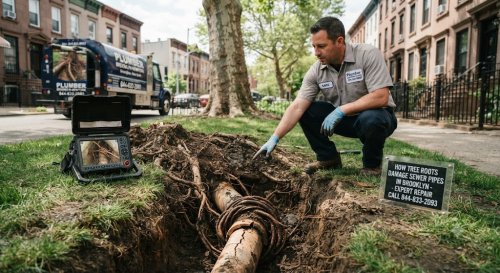
Tree root intrusion: Mature street trees and backyard foliage across Brooklyn search for moisture. Tree roots frequently infiltrate tiny cracks in underground sewer pipes, growing inside and creating massive blockages.
-
Flushing non-flushable items: "Flushable" wipes, paper towels, feminine hygiene products, cotton balls, and diapers do not break down like toilet paper. They accumulate in sewer lines, creating impenetrable webs.
-
Grease and fat buildup: Pouring cooking oils, grease, and food scraps down kitchen sinks coats pipe interiors. Over time, grease hardens and narrows the pipe diameter.
-
Structural pipe sagging (Bellies): Ground shifting or poor initial installation can cause a section of the underground pipe to sink, creating a low spot where debris settles and blocks flow.
-
Heavy storms and municipal overload: During severe downpours, New York City's combined sewer system can reach full capacity, occasionally overwhelming private sewer laterals if backwater valves are not installed.
Signs You Should Never Ignore
Catching a sewer line problem early prevents catastrophic property damage. Keep an eye out for these critical warning signs:
-
Bad smells: Persistent sewage odors around drains or your basement suggest a venting issue or an accumulating blockage.
-
Slow drains throughout the house: If every drain in your home is sluggish, your main sewer line is compromised.
-
Pooling water around basement floor drains: A small puddle near your floor drain after washing clothes is a warning that water is struggling to escape.
-
Gurgling sounds: Air displaced by a blockage escapes through your traps, making bubbling noises.
-
Lush patches of lawn: An unexplained, unusually green or soggy patch in your yard above the sewer line path often indicates a leaking or broken underground pipe.
Common Plumbing Problems Related to This Issue
Sewer backups rarely happen in isolation. They are often tied to or trigger other household plumbing emergencies:
-
Severe drain clogs: Localized branch line clogs can merge with main line issues.
-
Pipe leaks and structural damage: Backed-up wastewater puts pressure on pipe joints, causing secondary leaks behind walls or under slabs.
-
Fixture damage: Overflowing sewage ruins flooring, drywall, baseboards, and personal belongings.
-
Water heater failures: Basement backups can flood water heater burners, causing system failures.
Step-by-Step Professional Repair Process
When you hire a licensed plumbing team like Plumber Brooklyn New York, we follow a systematic, thorough approach to resolve the issue safely:
-
Step 1: Inspection: We arrive promptly and assess your property layout, listening carefully to your description of the symptoms.
-
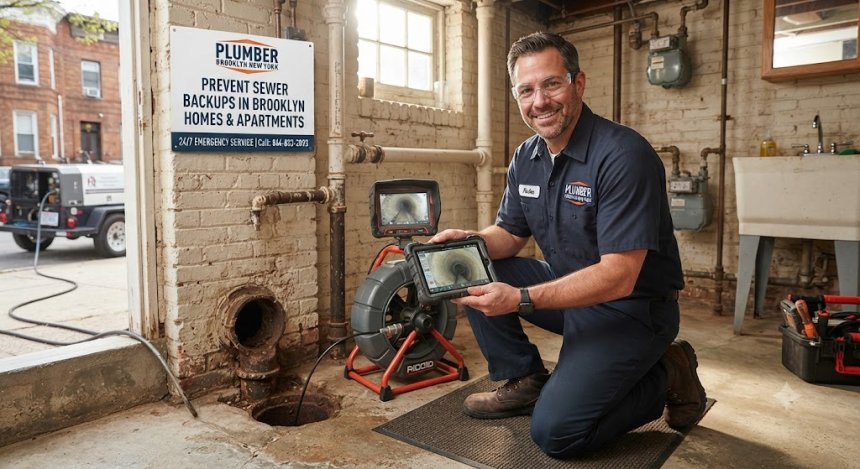
Step 2: Diagnosis: We deploy advanced waterproof sewer inspection cameras down your drain cleanouts to view the exact interior condition of your pipes.
-
Step 3: Estimate: We provide a transparent, upfront explanation of our findings and detailed cost estimates before starting any work.
-
Step 4: Repair: Depending on the diagnosis, we utilize professional mechanical snaking, hydro jetting, spot repairs, or trenchless pipe lining.
-
Step 5: Testing: We run water through your system and re-inspect with our cameras to verify complete flow restoration.
-
Step 6: Cleanup: We respect your Brooklyn home, ensuring our work areas are thoroughly cleaned and sanitized.
-
Step 7: Maintenance Advice: We offer customized guidance on how to prevent future backups.
Can You Fix It Yourself?
While homeowners love DIY projects, main sewer backups are never safe DIY territory.
Safe DIY Measures vs. Professional Limits
-
Safe action: You can clear small individual sink clogs with a standard plunger or basic hand auger.
-
Dangerous territory: Renting a heavy motorized power auger without experience can damage old cast iron or clay pipes, punch holes through pipe walls, or injure you severely. Furthermore, coming into contact with raw sewage poses serious biological health risks.
-
When to call a pro: If multiple fixtures are backed up, if you smell sewage, or if water is pooling in your basement, stop using your plumbing immediately and call a licensed professional.
Tools Professionals Use
Modern plumbing relies heavily on advanced technology to diagnose and fix sewer problems accurately without unnecessary digging:
-
Sewer inspection cameras: Miniature high-resolution cameras pushed on flexible rods reveal cracks, roots, grease, and collapses with pinpoint accuracy.
-
Hydro jetting equipment: High-pressure water streams (up to 4,000 PSI) scour pipe interior walls clean of scale, grease, and roots, restoring pipes to a like-new condition.
-
Pipe locators: Radio transmitters attached to camera heads pinpoint the exact depth and surface location of underground pipe damage beneath concrete or landscaping.
-
Trenchless repair gear: Specialized equipment allows us to rehabilitate broken pipes underground without tearing up your entire Brooklyn yard, driveway, or basement floor.
How Long Does the Repair Usually Take?
Repair timelines vary based on the nature of the obstruction:
-
Simple clearing (Hydro jetting or snaking): Usually takes 1 to 3 hours.
-
Moderate repairs (Spot repairs or clearing heavy root intrusion): Takes half a day to a full day.
-
Major repairs (Trenchless lining or full lateral replacement): Can take 1 to 3 days depending on excavation requirements and NYC permit approvals.
-
Emergency response: Our team responds rapidly to secure your property and stop active backups right away.
Cost Factors
Plumbing repair costs vary depending on the severity of the problem, pipe accessibility, materials required, emergency service status, property type, and local labor rates. Key cost components include:
-
Diagnostic fees: Covering camera inspection time and expert assessment.
-
Extent of the blockage: Simple grease clogs cost less to clear than collapsed pipes invaded by mature tree roots.
-
Accessibility: Pipes located deep beneath concrete basement slabs or requiring street excavation involve more labor and equipment.
-
Repair method: Traditional excavation versus trenchless rehabilitation.
Hidden Truths Homeowners Should Know
-
Small slow drains quickly escalate into expensive midnight sewage emergencies.
-
Chemical drain cleaners rarely solve root or structural main line clogs; instead, they corrode old pipes and endanger plumbers.
-
Standard homeowner's insurance policies typically do not cover damage caused by neglected sewer lines or groundwater seepage.
-
Tree roots will return year after year unless the damaged pipe is lined or replaced.
-
Hard water and mineral scaling gradually reduce interior pipe diameters.
-
Delaying repairs leads to structural rot, mold growth, and compromised home foundations.
-
Annual preventative maintenance saves property owners thousands of dollars in emergency restoration bills.
15 Common Mistakes Homeowners Make
-
Ignoring slow drains: Waiting until a total blockage occurs turns a minor fix into an emergency.
-
Using harsh chemical drain cleaners: These chemicals degrade older Brooklyn pipes and fail to remove solid obstructions.
-
Flushing wet wipes: Even wipes labeled "flushable" clog sewer laterals.
-
Pouring cooking grease down the sink: Grease solidifies in cold underground pipes.
-
Ignoring water pressure issues: Pressure drops can signal hidden supply or drainage leaks.
-
Hiring unlicensed handymen: Unlicensed workers often lack insurance and violate NYC plumbing codes.
-
Skipping annual maintenance: Regular camera inspections catch problems early.
-
Waiting until emergencies happen: Emergency calls cost more than scheduled maintenance.
-
Using incorrect pipe materials during DIY repairs: Mismatching PVC and cast iron causes joint failures.
-
Over-tightening fittings: This cracks delicate PVC and metal threads.
-
Planting large trees near sewer lines: Fast-growing trees seek out pipe moisture.
-
Failing to install a backwater valve: Essential for low-lying basement properties.
-
Disposing of paint and chemicals down drains: This damages the environment and pipe seals.
-
Discarding coffee grounds and eggshells in sinks: These gritty particles settle in pipe low spots.
-
Not knowing where the main cleanout is located: Wasting valuable time during an overflow looking for access points.
Maintenance Tips to Prevent Sewer Backups
-
Watch what you flush: Only flush human waste and toilet paper.
-
Catch grease: Pour cooking oil into a container and throw it in the trash rather than down the drain.
-
Install drain screens: Catch hair and food scraps before they enter your plumbing.
-
Schedule annual hydro jetting: Keep grease and scale buildup under control in high-use buildings.
-
Mind your landscaping: Keep large trees and shrubs away from underground sewer lateral paths.
-
Inspect older pipes: Schedule a camera inspection if your Brooklyn home is over 40 years old.
-
Install a backwater valve: Prevent municipal water from surging back into your basement during major storms.
-
Know your main cleanout: Keep the access point clear of storage boxes and furniture.
-
Run hot water weekly: Flush kitchen lines with hot water to help dissolve minor soap and grease accumulation.
-
Address slow drains immediately: Call a professional at the first sign of sluggishness.
-
Protect basement drains: Keep debris away from floor drains.
-
Educate household members or tenants: Ensure everyone in the building follows proper waste disposal rules.
-
Avoid garbage disposal abuse: Do not treat your sink like a trash compactor.
-
Check sump pumps regularly: If your basement relies on a sump pump, test it before storm season.
-
Partner with local professionals: Build a relationship with a trusted Brooklyn plumbing team.
When Should You Call an Emergency Plumber?
Some plumbing situations cannot wait until regular business hours. Call an emergency plumber immediately if you experience:
-
Raw sewage backing up into living spaces or basement floors.
-
A completely burst or collapsed main sewer pipe.
-
Total loss of all drainage functionality in the building.
-
Severe, uncontrolled flooding from plumbing fixtures.
-
Persistent gas odors (if you smell gas, evacuate immediately and call your utility provider and emergency services).
Immediate action prevents extensive structural damage, mold outbreaks, and expensive biohazard remediation.