How to Prevent Clogged Kitchen and Bathroom Drains in New York City, NY
Learn effective ways to prevent clogged kitchen and bathroom drains in NYC. Expert tips on grease, hair, and drain maintenance. Call 844 833 2093 for professional help.

Why Drains Clog So Often in NYC Properties
NYC drains face more stress than drains in most other cities. Here's why:
Old Pipes in Pre-War Buildings
Most buildings in Brooklyn, Manhattan, and the Bronx were built before 1960. Many still have their original cast iron or galvanized steel drain pipes. The rough interior surface of these pipes catches grease and food particles much faster than modern PVC pipes. Over time, that buildup hardens, and clogs form.
High-Density Living
In a typical NYC apartment building, your kitchen and bathroom drains connect to a shared vertical stack. That same pipe handles waste from every unit above and below you. More volume means faster buildup, and one unit's grease problem quickly becomes the whole riser's problem.
NYC Cooking Culture
New Yorkers cook a lot—and many of us are guilty of rinsing cooking oil down the sink or dumping coffee grounds without a second thought. All of it adds up inside those old pipes.
Tree Roots and Aging Sewer Lines
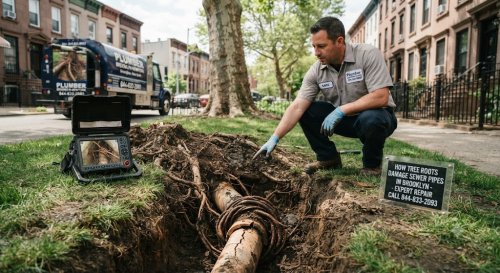
Tree roots are one of the costliest drain problems in NYC. Roots naturally seek moisture and nutrients, making your sewer lines an irresistible target. Tiny "hair roots" slip through minor cracks or loose joints in clay or cast-iron pipes. Once inside, they have access to a constant supply of water and organic matter, allowing them to grow rapidly.
The Most Common Causes of Kitchen Drain Clogs
1. Grease and Cooking Oil
This is the number one cause of kitchen drain clogs across NYC. Grease goes down the drain as a liquid—but inside the pipe, it cools and solidifies into a sticky layer. Over weeks, that layer grows thicker and traps everything else: food particles, soap, coffee grounds.
What to do instead: Never pour cooking oil or grease down the drain—not even a small amount. Cool it in a container, seal it, and throw it in the trash. The NYC Department of Environmental Protection advises using paper towels to wipe residual grease from dishes, pots, and pans before washing them.
2. Coffee Grounds
Coffee grounds feel harmless, but they are not. They compact into a dense, wet mass inside the pipe that holds together like cement. Furthermore, they don't dissolve in water—they simply accumulate. A few weeks of daily dumping is enough to create a serious blockage.
What to do instead: Put coffee grounds in the rubbish or use them as compost.
3. Starchy and Fibrous Foods
Pasta, rice, and potato peels expand when they absorb water. What goes down as a small amount swells into a sticky plug inside the pipe. Celery, artichoke leaves, and similar fibrous vegetables also wrap around anything they touch—including a plumber's snake.
What to do instead: Never put these items down the garbage disposal.
4. Soap Residue and Mineral Buildup
Dish soap leaves a film on pipe walls. In NYC, where the water has moderate mineral content, calcium and magnesium deposits stick to that film and harden. Over months, the inside diameter of the pipe narrows—restricting water flow.
5. Garbage Disposal Misuse
Improper use of garbage disposals can lead to slow drainage. Putting grease, oil, fibrous foods, or overloading the disposal causes debris to accumulate further down the line.
The Most Common Causes of Bathroom Drain Clogs
Hair and Soap Scum
Hair is the leading cause of bathroom drain clogs. It combines with soap scum and body oils to form tough, rope-like clogs that resist simple removal attempts. In buildings with older plumbing, these clogs can extend deep into the system, affecting multiple units.
What to do instead: Use a drain protector or mesh screen to catch hair. Gather any loose hair in the tub or shower and throw it in the trash. Regularly clean the drain to keep water flowing smoothly.
"Flushable" Wipes
Despite manufacturer claims, "flushable" wipes don't break down quickly enough in pipe systems. The NYC Department of Environmental Protection identifies improper disposal of wipes as one of the leading causes of sewer backups.
What to do instead: Only flush toilet paper and human waste.
Warning Signs Your Drain Is About to Clog
A drain clog rarely appears overnight. It builds up over weeks. Watch for these signs—the earlier you catch it, the cheaper the fix:
-
Water pools in the sink for more than 30 seconds before draining
-
Gurgling sounds when you run the tap or dishwasher
-
A rotten or sewage smell coming up from the drain
-
Water backing up into the second bowl of a double sink
-
The garbage disposal runs but the sink still fills
-
The same drain keeps clogging every few weeks
-
Other drains in the apartment slow at the same time
⚠️ Multiple slow drains at once means a shared stack or main line problem—not just a single clog. This is more serious and needs a licensed plumber immediately.
DIY Prevention: What You Can Do Yourself
Daily Habits That Make a Difference
Kitchen:
-
Never pour grease or cooking oil down the drain. Cool it in a container and toss it in the bin. This single habit prevents the majority of kitchen drain clogs in NYC.
-
Use a sink strainer at all times. A $5 mesh strainer catches food scraps before they enter the pipe. Clean it after every use.
-
Run cold water for 30 seconds after using the garbage disposal. Cold water keeps fats solid so they flush through rather than coating pipe walls.
-
Avoid putting fibrous vegetables (celery, potato peels), rice, pasta, bones, or eggshells down the disposal.
Bathroom:
-
Install hair catchers in all showers and tubs. They're inexpensive and effective at preventing the most common cause of bathroom drain clogs.
-
Gather loose hair and throw it in the trash, not down the drain.
-
Never flush hair down the toilet—it can stick to pipes, mix with soap and oils, and cause serious clogs.
Monthly Maintenance
-
Kitchen: Flush with boiling water once a month. This keeps light grease from hardening. Takes 60 seconds and costs nothing.
-
Bathroom: Clean drain stoppers and strainers regularly.
-
All Drains: Use enzyme-based cleaners (safe for pipes) rather than harsh chemicals. Enzyme cleaners break down organic matter without damaging pipes.
What to Avoid
Chemical Drain Cleaners (Drano, Liquid-Plumr):
Chemical drain cleaners can damage aging cast iron and galvanized pipes—the exact pipe types in most NYC pre-war buildings. They contain lye and sulfuric acid that:
-
Damage pipes significantly over time
-
Fail on grease clogs (the most common cause in NYC)
-
Create hazardous fumes
When to Call a Professional
If DIY efforts don't work—or if the clog keeps coming back—it's time for a licensed plumber. Professional tools include:
Cable Snaking (Drain Augering)
A plumber feeds a long, motorized cable into the drain. The rotating tip breaks through the clog and pulls debris back out. This is the right fix for most straightforward clogs.
NYC Cost: $150–$350 depending on depth and difficulty
Hydro Jetting
Hydro jetting sends a high-pressure water stream through the pipe at 3,000 to 4,000 PSI. It removes the clog and cleans the full inside surface of the pipe—grease, mineral deposits, soap film, everything. The result is a pipe that drains like new.
This is the right fix for recurring clogs, old cast iron pipes in pre-war buildings, and shared stack cleanouts.
Video Camera Inspection
A small camera is fed through your plumbing system to visually inspect pipes and identify the cause of recurring clogs.
Annual Professional Maintenance
Especially in pre-war buildings, annual hydro jetting removes the buildup that home remedies cannot reach. It costs $300–$500—compared to a $400–$800 emergency call when the pipe finally blocks completely.
Who Is Responsible for Clearing a Clogged Drain in NYC?
If you own your apartment: The problem (and the fix) falls squarely on you.
If you rent: Your landlord is typically required to address plumbing issues. Under the warranty of habitability, landlords must keep plumbing in good working order. A chronically slow or clogged drain may violate this rule.
However, you can be held responsible if:
-
The clog is caused by your negligence—like pouring grease down the drain or flushing inappropriate items
-
You have a consistent pattern of clogs despite your landlord's instructions
What to do: Try a plunger or enzyme cleaner first. If that fails, notify your landlord in writing. If the landlord refuses to fix it and the clog is not your fault, you can call 311 for "sinks, bathtubs, showers, toilets, or other plumbing fixtures that are broken or defective."
Your NYC Drain Prevention Checklist
Daily
- □
Never pour grease down the kitchen drain
- □
Use sink strainers in kitchen and bathroom
- □
Gather hair from showers and throw in trash
- □
Run cold water for 30 seconds after garbage disposal use
Monthly
- □
Flush kitchen drain with boiling water
- □
Clean drain strainers and stoppers
- □
Use enzyme-based drain cleaner (not chemical)
Annually
- □
Schedule professional drain cleaning (especially in pre-war buildings)
- □
Consider video camera inspection for older pipes
- □
Check for early warning signs like slow drains or gurgling
Frequently Asked Questions
Q1: Can I prevent grease clogs by running hot water while pouring grease down the drain?
No. Running hot water while pouring grease down the sink doesn't prevent clogs. The grease cools and solidifies further down the pipe, creating a sticky layer that traps other debris. The only safe way to dispose of cooking grease is to let it cool, pour it into a sealed container, and throw it in the trash.
Q2: Why are my drains slow even though I don't pour grease down the sink?
Several factors could be at play: old cast iron pipes with rough interior surfaces, mineral buildup, shared drain stack issues, or tree root infiltration in the sewer line. Older buildings, especially in NYC, often have pipes that simply need professional cleaning regardless of your individual habits.
Q3: Are "flushable" wipes actually flushable?
No. Despite manufacturer claims, "flushable" wipes don't break down quickly enough in pipe systems. The NYC Department of Environmental Protection identifies them as one of the leading causes of sewer backups. Only flush toilet paper and human waste.
Q4: How much does professional drain cleaning cost in NYC?
Basic kitchen drain snaking costs $150–$350. Hydro jetting (high-pressure water cleaning) costs $300–$800. A drain camera inspection costs $100–$200. Emergency same-day service typically adds $75–$150.
Q5: Is it better to use Drano or call a plumber?
Call a plumber. Chemical drain cleaners like Drano damage aging cast iron and galvanized pipes—the exact pipe types in most NYC pre-war buildings. They also fail on grease clogs, which are the most common cause in NYC. Professional snaking or hydro jetting is safer and more effective.
Q6: How can I tell if my clog is in my unit or the building's main line?
If only one drain is affected, the problem is likely in that specific drain. If multiple drains are slow or backed up simultaneously (kitchen and bathroom), you likely have a shared stack or main line problem that affects multiple units. This requires professional attention.
Q7: What's the best way to prevent hair clogs?
Use a drain protector or mesh screen in all showers and tubs. They're inexpensive and catch hair before it enters the pipes. Also, gather loose hair from the tub after showers and throw it in the trash—never rinse it down the drain.
Q8: How often should I have my drains professionally cleaned?
For homes in pre-war buildings, we recommend annual professional cleaning (especially hydro jetting). This removes the buildup that home remedies cannot reach and prevents costly emergency calls. The cost of annual maintenance is significantly less than emergency repairs.
Q9: What should I do if I have a plumbing emergency?
If you experience sewage backup, multiple slow drains, gurgling sounds, or a complete blockage, call an emergency plumber immediately. Don't use water fixtures and don't attempt DIY fixes. A professional will arrive with the right equipment to resolve the issue.
Q10: Can I use baking soda and vinegar to prevent clogs?
Yes—baking soda and white vinegar is a safe, effective way to maintain drains. Pour half a cup of baking soda down the drain, then follow with half a cup of white vinegar. Cover the drain opening and let the mixture react for 20 minutes. Then flush with hot water. This works on soap and light food residue—not on hardened grease—and is safe for all pipe types.
Get Professional Drain Cleaning in Brooklyn, NYC
At Plumber in Brooklyn New York City, we specialize in preventing and clearing clogged drains for homeowners and renters throughout the five boroughs. Our licensed plumbers use the latest equipment—including hydro jetting and video camera inspection—to diagnose and solve your drain problems quickly and effectively.
Why Choose Us?
-
Licensed & Insured—Fully compliant with NYC codes
-
24/7 Emergency Service—Available around the clock
-
Upfront Pricing—No hidden fees or surprise charges
-
Experienced Team—Decades of experience with NYC's unique plumbing challenges
-
Latest Technology—Hydro jetting, video inspection, and more