Repair vs Replace Old Plumbing Pipes in Brooklyn Homes
Deciding whether to repair or replace aging Brooklyn plumbing? Learn lifespan signs, cost factors, brownstone considerations, and when to upgrade.

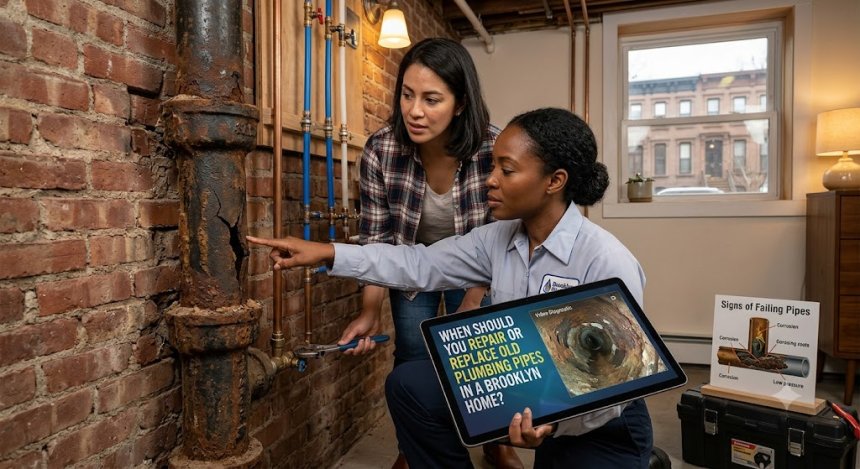
When Should You Repair or Replace Old Plumbing Pipes in a Brooklyn Home?
Owning a property in Brooklyn comes with historical charm, classic architecture, and unique structural character. However, whether you live in a landmarked brownstone in Park Slope, a pre-war co-op in Brooklyn Heights, or a multi-family property in Bushwick, original or aging plumbing systems present ongoing challenges.
As pipes age, property owners face a recurring dilemma: Is it better to make another localized repair or invest in a full pipe replacement?
Patching a single leak might seem budget-friendly in the short term, but repeatedly repairing an inherently failing pipe network quickly becomes an expensive cycle. Understanding pipe lifespans, identifying systemic failure signs, and evaluating cost-benefit tradeoffs will help you make an informed decision for your Brooklyn home.
+-----------------------------------------------------------------------+
|                    REPAIR VS. REPLACEMENT DECISION TREE                |
+-----------------------------------------------------------------------+
|                                                                       |
|                       [ Pipe Issue Discovered ]                       |
|                                   |                                   |
|             +---------------------+---------------------+             |
|             |                                           |             |
|      Single Isolated Leak                      Multiple Frequent Leaks |
|      Pipe < 40 Years Old                       Pipe > 50 Years Old    |
|      Localized Damage                          Widespread Corrosion   |
|             |                                           |             |
|             v                                           v             |
|    ( OPTION 1: REPAIR )                       ( OPTION 2: REPLACE )   |
|    - Spot fixing                              - Targeted repiping     |
|    - Sectional replacement                    - Trenchless lining     |
|    - Minor cost / quick turnaround            - Full system upgrade   |
|                                                                       |
+-----------------------------------------------------------------------+
What Is the Repair vs. Replace Dilemma?
The decision to repair or replace plumbing comes down to evaluating whether an issue is isolated to a single component or represents structural failure across your entire plumbing system.
-
Plumbing Repair: Fixing a specific, localized issue—such as replacing a pinhole-leaked elbow joint on a copper supply line, clearing a temporary grease clog, or installing a repair sleeve on an accessible basement pipe.
-
Plumbing Replacement (Repiping): Removing and replacing entire runs of supply or waste lines—such as swapping old galvanized steel branch lines for PEX/copper or installing a new main sewer lateral out to the street.
Common Brooklyn Plumbing Materials & Lifespans
| Pipe Material | Common Usage | Average Lifespan | Primary Failure Symptoms |
| Cast Iron | Main waste & sewer stacks | 50 – 75 Years | Interior rust scale (tuberculation), bottom channel erosion, cracking |
| Galvanized Steel | Old supply lines | 40 – 50 Years | Internal corrosion, low water pressure, discolored/rusty water |
| Brass Pipe | High-end legacy supply lines | 40 – 70 Years | Mineral encrustation, hairline thread cracks, zinc leaching |
| Copper (Type L/M) | Supply distribution lines | 50 – 70+ Years | Pinhole leaks from acid water, green oxidation buildup, thin walls |
| Lead | Main water service lines | Replace Immediately | Health hazard, water contamination risk |
| PEX / PVC / ABS | Modern supply & waste lines | 50+ Years | Improper installation fittings, physical puncture damage |
Why Does Plumbing Degrade Over Time?
Plumbing pipes don't last forever. Several factors accelerate pipe deterioration across Brooklyn neighborhoods:
+-----------------------------------------------------------------------+
|                     PRIMARY CAUSES OF PIPE DEGRADATION                |
+-----------------------------------------------------------------------+
|  [ Internal Oxidation ] ---> Water & oxygen corrode metal walls        |
|  [ Dissolved Minerals ] ----> Hard water creates restrictive scaling  |
|  [ High Water Pressure ] ---> Stresses aged joints and solder points   |
|  [ Galvanic Corrosion ] ---> Dissimilar metals joined without dielectric|
|  [ Structural Settling ] --> Building shifts strain rigid cast iron   |
+-----------------------------------------------------------------------+
1. Natural Age and Oxidation
Metal pipes constantly react with oxygen and water chemistry. Iron rusts, copper oxidizes, and galvanized steel corrodes internally until the pipe walls become too thin to support standard household water pressure.
2. Galvanic Corrosion (Joined Dissimilar Metals)
In older Brooklyn homes where previous renovations were completed piecemeal, plumbers sometimes connected copper directly to galvanized steel without dielectric unions. This causes a galvanic reaction that destroys the weaker metal at the connection point.
3. Excessive Municipal Water Pressure
NYC water main pressure can fluctuate. High water pressure without a functional Pressure Reducing Valve (PRV) places continuous strain on thin pipe walls, joint solder, and internal appliance valves.
4. Dissolved Mineral Buildup
Over decades, mineral deposits line the interiors of supply pipes, reducing internal diameter, restricting water flow, and causing localized pressure imbalances that trigger pinhole leaks.
Critical Warning Signs You Should Never Ignore
Recognizing early warning signs helps you address plumbing failures before standing water ruins subfloors, ceiling plaster, or finished basements.
-
Persistent Low Water Pressure: If water flow is weak across multiple faucets even after replacing aerators, internal corrosion inside galvanized steel pipes is restricting the flow.
-
Brown, Yellow, or Discolored Water: Rusty water coming from hot or cold taps—especially after water sits unused overnight—signals that supply pipes are flaking rust internally.
-
Multiple Pin-Hole Leaks in Short Order: If you experience two or more leaks on the same pipe line within a single year, the metal wall has thinned systematically. Spot repairs will not solve the issue.
-
Sewer Odors and Damp Concrete: Persistent rotten-egg smells or damp patches on concrete basement floors point to cracked or eroded underground cast iron main lines.
-
Cracking or Flaking Paint on Plaster Walls: Brownish water stains or dampness along brownstone party walls often indicate slow leaks in vertical waste or vent stacks hidden behind plaster.
-
Unusual Gurgling Noises when Fixtures Drain: Gurgling in toilets when sinks drain indicates restricted air flow or scale buildup inside main waste stacks.
Comparing Options: Spot Repair vs. Targeted Replacement vs. Full Repiping
When evaluating your home’s needs, consider these repair tiers:
+----------------------------------------------------------------------------------+
|                              REPAIR VS. REPLACE COMPARISON                       |
+----------------------------------------------------------------------------------+
| Feature             | Localized Repair       | Sectional Replacement | Full Repiping |
+---------------------+------------------------+-----------------------+---------------+
| Scope               | Single fitting or leak | One room/stack run    | Entire home   |
| Disruption Level    | Minimal (1–2 hours)    | Moderate (1–2 days)   | High (3–7 days)|
| Structural Impact   | None                   | Localized wall access | Multi-floor access|
| Long-Term Reliability| Low (if pipe is old)  | High for replaced zone| Complete peace|
| Cost Investment     | Lowest upfront         | Mid-tier              | Highest upfront|
+----------------------------------------------------------------------------------+
Option A: Localized Spot Repair
Recommended when the pipe is relatively young (under 30 years old), the surrounding pipe material shows thick, healthy walls, and the leak resulted from a loose fitting or mechanical puncture rather than widespread corrosion.
Option B: Sectional / Targeted Replacement
Ideal for Brooklyn multi-family or brownstone layouts where an isolated section—such as the basement horizontal waste run, a specific bathroom supply branch, or the kitchen stack—is failing, while upper-floor distribution lines remain intact.
Option C: Full Building Repiping
Necessary when original galvanized supply pipes or cast iron stacks have reached the end of their functional lifespan, when lead main service lines are detected, or during full gut renovations of historic properties.
Step-by-Step Professional Diagnostic Process
Before making replacement recommendations, a licensed plumber will perform a systematic diagnostic inspection:
+-----------------------------------------------------------------------+
|                    PROFESSIONAL DIAGNOSTIC WORKFLOW                   |
+-----------------------------------------------------------------------+
|                                                                       |
|  [Step 1] Visual System Inspection & Water Quality Assessment        |
|     |                                                                 |
|     v                                                                 |
|  [Step 2] HD Video Sewer Camera Inspection (Waste Lines)              |
|     |                                                                 |
|     v                                                                 |
|  [Step 3] Static Hydrostatic Pressure Testing (Supply Lines)          |
|     |                                                                 |
|     v                                                                 |
|  [Step 4] Ultrasonic Leak Detection & Wall Moisture Mapping           |
|     |                                                                 |
|     v                                                                 |
|  [Step 5] Detailed Written Scope of Work & Options Evaluation         |
|                                                                       |
+-----------------------------------------------------------------------+
Step 1: Visual and Water Assessment
The technician checks exposed piping in basements, mechanical rooms, and under sinks for corrosion, flaking rust, blue-green copper staining, or improper dissimilar metal connections.
Step 2: High-Definition Video Sewer Camera Inspection
For waste and sewer lines, a waterproof camera pushed through the main cleanout reveals the pipe interior—identifying scale buildup, bottom channel erosion, root intrusion, or pipe sagging.
Step 3: Pressure Testing
Pressure gauges test static water pressure on supply lines to check for hidden system leaks or faulty pressure-reducing valves.
Step 4: Transparent Options Presentation
The plumber outlines clear repair vs. replacement options, detailing timelines, structural access requirements, and project scope so you can choose the best route for your property.
Modern non-Invasive Technologies: Trenchless Pipe Lining
In many cases, traditional replacement required cutting down historic plaster walls or jackhammering basement concrete slabs. Modern plumbing technology offers non-invasive alternatives:
| Technology | Best Suited For | Key Advantages |
| Trenchless CIPP (Cured-In-Place Pipe) Lining | Underground cast iron or clay sewer lines | Creates a seamless epoxy "pipe-within-a-pipe" without excavating floors or lawns |
| Epoxy Pipe Coating | Copper or iron supply/drain lines | Seals pinhole leaks internally and prevents future corrosion without wall demolition |
| PEX Tubing Reticulation | Supply line replacements | Flexible tubing fished through existing wall cavities, minimizing plaster cutting |
Timeline Expectations
Understanding project duration helps you plan living arrangements or commercial downtime:
-
Localized Spot Pipe Repair: 1 to 3 hours.
-
Main Sewer Hydro Jetting & Spot Repair: 3 to 6 hours.
-
Trenchless CIPP Sewer Line Lining: 1 day (curing takes 3–6 hours).
-
Single-Bathroom Branch Repiping: 1 to 2 days.
-
Full Brownstone/Multi-Family Repiping: 3 to 7 days (depending on wall access and finish protection).
Key Cost Factors
Plumbing repair costs vary depending on the severity of the problem, accessibility, materials required, emergency service, property type, and local labor rates. Primary cost drivers include:
+-----------------------------------------------------------------------+
|                          PRIMARY COST DRIVERS                         |
+-----------------------------------------------------------------------+
|  [ Accessibility ] --------> Exposed basement pipes vs. In-wall stacks|
|  [ Pipe Material Used ] ---> PEX flexible vs. Rigid Type L Copper     |
|  [ Scope of Replacement ] -> Isolated branch vs. Whole-house repipe   |
|  [ Historical Finishes ] --> Protecting & restoring plaster, tile, wood|
|  [ Municipal Permits ] -----> NYC DEP / DOB permits and inspections   |
+-----------------------------------------------------------------------+
-
Pipe Accessibility: Replacing hanging basement pipes is straightforward, whereas accessing vertical stacks hidden inside historic plaster wall cavities requires careful drywall or plaster work.
-
Selected Piping Material: PEX (cross-linked polyethylene) is often faster to install and costs less in material than rigid Type L copper or heavy cast iron, though copper remains preferred for certain commercial applications.
-
NYC DOB/DEP Permitting Requirements: Major main service lines or sewer replacements require municipal opening permits, street inspections, and certified filings.
-
Property Size & Floor Count: Multi-story brownstones require more linear footage of pipe, vertical risers, and drop points than single-story structures.
Hidden Truths Property Owners Should Know
-
Frequent Spot Repairs Cost More Than Repiping: Paying for three emergency late-night service calls in two years often exceeds the cost of replacing the problematic pipe section permanently.
-
Insurance May Deny Coverage for Aged Pipes: While standard homeowners insurance covers sudden water damage from a burst pipe, policies usually exclude gradual leaks caused by neglected, aging plumbing.
-
Lead Main Lines Must Be Addressed: Lead service lines connecting older Brooklyn properties to city water mains pose health risks and should be replaced with seamless copper lines.
-
New Piping Boosts Property Value: Upgraded plumbing systems with high water flow and modern code compliance are major selling points for prospective Brooklyn buyers.
-
Temporary Chemical Cleaners Accelerate Failure: Pouring harsh liquid drain openers down thin, scaled cast iron lines eats through remaining metal walls, turning a minor clog into a major structural leak.
15 Common Plumbing Mistakes to Avoid
-
Ignoring recurring pinhole leaks on copper or galvanized pipes.
-
Using chemical drain openers to clear slow drains in aged cast iron.
-
Joining copper and galvanized steel directly without dielectric unions.
-
Hiring unlicensed handymen who lack knowledge of NYC building codes.
-
Delaying a sewer camera inspection when drains repeatedly run slow.
-
Flushing "flushable" wipes down fragile, rough-walled cast iron lines.
-
Over-tightening threaded pipe joints, causing brittle old fittings to crack.
-
Covering up water-stained plaster walls with paint without fixing the hidden leak first.
-
Failing to install a Pressure Reducing Valve (PRV) on high-pressure main lines.
-
Skipping annual sump pump or backwater valve inspections in basement spaces.
-
Choosing cheap thin-wall (Type M) copper instead of heavy-duty (Type L) copper for main supply lines.
-
Waiting for complete structural pipe collapse before planning repiping projects.
-
Failing to protect historic wood trim or tilework during wall access work.
-
Relying on temporary rubber patches or epoxy putty as permanent plumbing fixes.
-
Skipping required NYC Department of Buildings (DOB) plumbing filings for major renovations.
Preventive Maintenance Tips
Keep your plumbing system reliable with these straightforward maintenance guidelines:
+-----------------------------------------------------------------------+
|                    SEASONAL PLUMBING MAINTENANCE                       |
+-----------------------------------------------------------------------+
|                                                                       |
|   SPRING                   SUMMER                 AUTUMN / WINTER     |
|  +--------------------+   +-------------------+  +------------------+ |
|  | Check exposed      |   | Schedule sewer    |  | Insulate exposed | |
|  | basement pipes for |   | camera inspection |  | pipes in drafty  | |
|  | white/green rust   |   | for root intrusion|  | basements        | |
|  +--------------------+   +-------------------+  +------------------+ |
|                                                                       |
+-----------------------------------------------------------------------+
-
Inspect Exposed Pipes Seasonally: Check basement ceiling pipes, water meter connections, and utility areas for greenish copper corrosion or flaking iron rust.
-
Test Water Pressure Annually: Ensure your home's water pressure sits safely between 45 and 65 PSI to protect pipe joints from excessive strain.
-
Flush Water Heaters Yearly: Drain sediment from water heater tanks annually to prevent internal tank corrosion and maintain heat efficiency.
-
Run Hot Water Down Main Drains: Periodically flush main lines with hot water to keep grease and organic residue moving through horizontal runs.
-
Schedule Biennial Camera Inspections: For homes over 50 years old, schedule a sewer video inspection every two years to monitor cast iron conditions.
-
Install Mesh Strainers: Keep hair, soap scum, and food particles out of drain lines to reduce mechanical strain on waste pipes.
-
Insulate Cold-Exposed Pipes: Wrap water pipes near exterior basement walls or unheated crawlspaces to prevent winter freezing and pipe bursts.
When Should You Call an Emergency Plumber?
Certain situations require immediate professional intervention to stop property damage:
-
Active Main Water Line Burst: High-pressure water leaking rapidly from main supply lines or utility meters.
-
Raw Sewage Backups: Wastewater rising through basement floor drains, shower basins, or lower-level toilets.
-
Unexplained Water Flooding Under Slabs: Water pooling up through concrete floor cracks or basement floor slabs.
-
Complete Loss of Running Water: No water flow across the entire property, indicating main supply line failures or frozen pipes.
People Also Ask
How do I know if my Brooklyn home needs a full repipe?
You likely need a full repipe if your home has original galvanized steel or lead pipes, experiences frequent pinhole leaks, produces discolored rusty water, or suffers from severe, widespread water pressure loss.
Can you replace cast iron pipes without breaking walls or floors?
Yes. Trenchless Cured-In-Place Pipe (CIPP) lining allows plumbers to rehabilitate underground cast iron sewer lines internally without digging up basement floors or destroying concrete slabs.
Is PEX or copper better for repiping a Brooklyn brownstone?
PEX is flexible, highly resistant to freezing, quicker to install, and ideal for fishing through historic brownstone wall cavities with minimal plaster destruction. Copper remains extremely durable, long-lasting, and is often required for exposed main mechanical runs.
Voice Search Questions
-
Should I repair or replace my old plumbing pipes?
-
How much does it cost to repipe a brownstone in Brooklyn?
-
How long do cast iron sewer pipes last in old houses?
-
Who replaces lead water service lines in Brooklyn?