Heavy Rain Basement Plumbing Problems in Brooklyn
Discover how heavy rain can cause basement plumbing problems in Brooklyn. Learn causes, sewer backup warning signs, costs, and solutions
How Heavy Rain Can Cause Basement Plumbing Problems in Brooklyn
During a summer nor'easter, severe atmospheric event, or sudden tropical downpour, property owners across Kings County share a collective sense of anxiety. As heavy rain sweeps across Gowanus, Bushwick, Park Slope, and Flatbush, municipal storm drains fill to capacity. Within minutes, water stops flowing out of residential sewer laterals and begins pressing in reverse back toward basement floor drains, utility sinks, and lower-level toilets.
Understanding How Heavy Rain Can Cause Basement Plumbing Problems in Brooklyn requires recognizing the unique intersection between New York City's century-old civil infrastructure and private property plumbing systems. Unlike suburban towns with separate storm and sanitary sewers, much of Brooklyn operates on a combined sewer network. When torrential rainfall overpowers city mains, the surging volume has nowhere to go except backward into garden-level apartments and brownstone basements.
Left unchecked, heavy rain causes more than standing water on concrete—it drives raw sewage backups, structural foundation erosion, ruined mechanical equipment, and rapid toxic mold growth. This comprehensive guide details why storm-induced plumbing failures happen, warning signs to watch for, step-by-step professional fixes, and how to safeguard your property before the next storm hits.
What Is How Heavy Rain Can Cause Basement Plumbing Problems in Brooklyn?
Understanding How Heavy Rain Can Cause Basement Plumbing Problems in Brooklyn means examining how sudden deluge events overload private sub-grade drainage systems, municipal sewer laterals, and basement plumbing fixtures.
  HOW HEAVY RAIN FORCES SEWER BACKUPS INTO BROOKLYN BASEMENTS

  Cloudburst / Heavy Rainfall
              │
              ▼
  Overflowing Street Gutters & Catch Basins
              │
              ▼
  NYC Combined Municipal Main Saturated To 100% Capacity
              │
              ▼
  Reverse Hydraulic Pressure Pushes Wastewater Up Private Lateral
              │
              ▼
  Unprotected Basement Drains & Low-Lying Fixtures Overflow
When heavy rain falls across Brooklyn's dense asphalt surfaces, millions of gallons of runoff pour into street catch basins simultaneously. Because domestic wastewater from kitchens and bathrooms drains into the exact same underground main pipe as street stormwater, the combined sewer system quickly reaches maximum hydraulic capacity.
As water levels rise inside street mains, extreme hydrostatic pressure forces wastewater backward through private main sewer lines. Unprotected basement fixtures—such as floor drains, slop sinks, basement showers, and ground-floor toilets—act as relief valves, spilling contaminated water directly onto living spaces and concrete sub-floors.
Common Real-World Scenarios
-
The Garden Apartment Overflow: A tenant in a lower-level apartment in Bed-Stuy notices murky, foul-smelling water bubbling up through the bathroom floor drain during an hour-long torrential downpour.
-
The Sump Pump Failure: A homeowner in Marine Park relies on a single sump pump to remove groundwater rising around the foundation. The storm causes a localized power outage, the pump dies without a battery backup, and three feet of water fills the utility room.
-
The Sluice of Catch Basin Debris: Leaves and litter block a street-level driveway drain in Bay Ridge. Rainwater pools in the sunken driveway ramp, eventually breaking through the basement door seal and flooding the mechanical space.
Why Does This Plumbing Problem Happen?
Rainfall alone does not break a healthy plumbing system. Instead, heavy precipitation exposes hidden structural weaknesses, aging pipe materials, and municipal system limits.
1. NYC Combined Sewer System Capacity
Much of Brooklyn relies on combined sewer infrastructure designed over half a century ago. During severe cloudburst events, rainfall volume vastly exceeds the intake capabilities of regional water treatment plants, causing main lines under avenues to surcharge under high pressure.
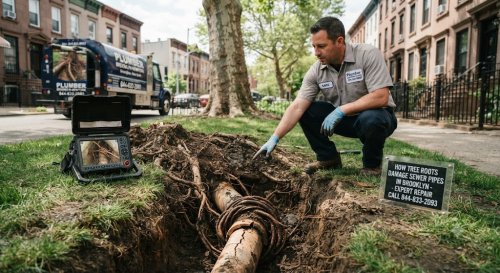
2. Tree Root Intrusion in Sewer Laterals
Mature shade trees lining streets in neighborhoods like Prospect Heights and Clinton Hill send roots deep underground searching for water. Roots penetrate small cracks in original clay sewer pipes. During normal dry periods, wastewater squeezes past the root mass. But when heavy rain floods the pipe, trapped debris and roots form an impenetrable dam, causing immediate backups into the basement.
3. Sump Pump Mechanical and Electrical Failures
Sump pumps operate under high stress during heavy rain. Common failure points include stuck float switches, burned-out pump impellers, clogged check valves, and simple power outages caused by lightning or grid failure.
4. Cracked, Bellied, or Sagging Cast Iron Pipe
Over decades, soil settlement beneath Brooklyn brownstones causes old cast iron waste pipes to drop, creating a low spot or "belly." Rain-driven surges hit these bellies, slowing water velocity down and causing heavy solids to settle, block, and back up into lower levels.
5. High Water Tables and Hydrostatic Pressure
Saturated soil exerts thousands of pounds of hydrostatic pressure against basement foundation walls and floor slabs. Ground water seeps through micro-cracks in floor slabs or wall seams, overloading sump pits and perimeter French drains.
6. Clogged Driveway, Yard, and Areaway Drains
Outdoor basement stairwells and sunken driveway ramps rely on drain grates to remove rainwater. When leaves, trash, or sediment cover these grates, water accumulates rapidly, forming deep ponds that breach basement doors and windows.
Signs You Should Never Ignore
Plumbing systems display clear warning signs before catastrophic failure during storm events. Pay attention to these early indicators:
-
Gurgling Sounds from Basement Fixtures: Hearing bubbling or gurgling noises coming from a basement toilet or sink during heavy rain means air is being compressed inside the main drain by trapped water.
-
Slow Draining in Basement Sinks while Raining: If upper-floor sinks drain normally but basement fixtures drain sluggishly during a storm, hydraulic pressure is building in your sewer lateral.
-
Unusual Sewage Odors near Basement Drains: Persistent foul odors emerging from floor drains indicate dried-out P-traps or wastewater creeping back up the line.
-
Dampness or Water Seepage at Wall-Floor Joints: Moisture beads appearing along the edge where the basement floor meets the foundation wall mean hydrostatic pressure is mounting outside.
-
Water Rising and Falling in Basement Toilet Bowls: Fluctuation of standing water inside a basement toilet bowl during gusty winds or heavy rain points to severe pressure imbalances inside the main vent stack and drain line.
-
Musty Odors and High Humidity: A sudden increase in basement humidity or a damp, earthy smell after mild rain indicates hidden water intrusion beneath sub-floors or behind finished walls.
Common Plumbing Issues Related to Heavy Rain
┌─────────────────────────────────────────────────────────────────────────┐
│                 STORM-RELATED BASEMENT PLUMBING HAZARDS                 │
├────────────────────────────┬────────────────────────────────────────────┤
│ Issue                      │ Primary Cause                              │
├────────────────────────────┼────────────────────────────────────────────┤
│ Reverse Sewer Backups      │ Surcharged municipal main pushing back     │
│ Sump Pump Pit Flooding     │ Motor burn-out or localized power loss     │
│ Water Heater Burner Damage │ Submerged gas control valves & burners     │
│ Foundation Wall Seepage    │ Hydrostatic pressure buildup in saturated  │
│                            │ soil                                       │
│ Main Drain Collapse        │ Shifted soil washing away support beneath  │
│                            │ corroded clay laterals                     │
└────────────────────────────┴────────────────────────────────────────────┘
Main Line Sewer Backups
When street sewer lines fill, blackwater containing dangerous bacteria, viruses, and physical waste backs up into lower living spaces, creating an immediate biohazard that requires professional remediation.
Water Heater and Heating Boiler Damage
Basement utility rooms house high-value mechanical systems. Floodwaters submerge gas control valves, electrical burners, and electronic ignition modules on boilers and water heaters, destroying equipment and creating fire or gas explosion hazards.
Foundation Erosion and Slab Cracking
Continuous hydrostatic pressure pushing against unsealed foundation walls slowly washes away supporting soil beneath basement slabs, causing floor slabs to crack, shift, and drop over time.
Step-by-Step Professional Repair & Mitigation Process
When a licensed plumbing contractor responds to storm-related basement flooding in Brooklyn, they follow a strict, step-by-step diagnostic and mitigation process:
┌────────────────────────────────────────────────────────────────────────┐
│               THE 7-STEP STORM DAMAGE & PREVENTION PROCESS              │
└────────────────────────────────────────────────────────────────────────┘
  [1. Emergency Water Extraction & System Safety Shut-Off]
                                 │
                                 ▼
  [2. Video Camera Inspection & Sewer Line Mapping]
                                 │
                                 ▼
  [3. Mechanical Clearing & Hydro Jetting]
                                 │
                                 ▼
  [4. Itemized Mitigation & Repair Proposal]
                                 │
                                 ▼
  [5. Backwater Valve & Dual Sump Pump Installation]
                                 │
                                 ▼
  [6. High-Pressure System & Valve Seal Testing]
                                 │
                                 ▼
  [7. Site Sanitation & Preventative Maintenance Guidance]
-
Step 1: Emergency Water Extraction & Electrical Safety Isolation: Technicians enter the property equipped with protective gear, ensure electrical circuits to flooded areas are safely isolated, and pump out standing water.
-
Step 2: Video Camera Inspection: A waterproof, self-leveling sewer camera is pushed down the main drain line to identify structural cracks, root masses, bellies, or municipal lateral blockages.
-
Step 3: Mechanical Clearing & High-Pressure Hydro Jetting: Plumbers clear root dams, grease accumulation, and heavy silt using high-pressure hydro-jetting equipment, restoring original interior pipe capacity.
-
Step 4: Upfront Scope and Estimate: You receive an itemized proposal detailing necessary permanent fixes—such as installing a heavy-duty sewer backwater valve or dual sump pump system with battery backup.
-
Step 5: Code-Compliant Installation: Technicians excavate the basement slab near the main building trap to install an automatically sealing backwater valve and install a heavy-duty sump basin.
-
Step 6: System Testing and Pressure Verification: Installed valves and pumps undergo manual and hydraulic testing to verify that gate seals close tightly when backpressure is applied.
-
Step 7: Sanitation and Maintenance Briefing: The workspace is sanitized, and the technician walks the property owner through manual bypass levers, battery testing routines, and regular check schedules.
Can You Fix It Yourself?
Dealing with storm-induced water intrusion requires knowing the strict boundaries between quick self-help actions and dangerous tasks that require a professional.
Safe Homeowner Actions
-
Clearing leaves, trash, and street litter off outdoor area drains and driveway grates before a storm hits.
-
Checking that your sump pump power cord is plugged directly into an active, tested GFCI outlet.
-
Testing your sump pump before heavy rain by pouring a 5-gallon bucket of clean water directly into the pit to verify the float switch starts the motor.
-
Elevating personal items, boxes, and electronics off concrete basement floors onto heavy-duty plastic shelving.
When DIY Attempts Become Dangerous
-
Wading into Standing Water Around Electrical Outlets or Appliances: Entering a flooded basement with live electrical outlets, submerged boiler wiring, or water heaters poses severe electrocution risks.
-
Chemical Drain Cleaners in Standing Water: Pouring harsh caustic chemicals into standing basement water creates dangerous toxic fumes and skin-burn hazards without clearing main sewer line blockages.
-
Attempting DIY Main Sewer Line Digs: Excavating around main building traps or cutting into main sewer lines without proper trench shoring and NYC DOB permits can result in structural collapses and municipal fines.
Tools Professionals Use
To resolve complex storm-related plumbing failures, licensed plumbing companies use specialized diagnostic and extraction tools:
-
Dual-Camera HD Sewer Inspection Systems: Advanced camera heads equipped with radio transmitters that identify precise depth and location of broken underground pipes.
-
3,000+ PSI Hydro Jetting Units: Specialized nozzles that scour grease, mud, sand, and tree roots from main drain lines without damaging host pipes.
-
Commercial Submersible Trash Pumps: High-volume extraction pumps capable of removing thousands of gallons of solids-laden floodwater per hour.
-
Automatic Sewer Backwater Valves: Heavy-duty PVC or cast iron check valves featuring stainless steel flappers that automatically seal tight when reverse water flow occurs.
-
Dual-Battery Backup Sump Systems: Heavy-duty secondary pumps powered by industrial marine batteries, capable of running continuously for days during extended grid blackouts.
How Long Does the Repair Usually Take?
Repair and installation timelines depend on system damage, flood depth, and structural accessibility:
-
Emergency Water Extraction & Main Clearing (2 to 5 Hours): Pumping out standing water, clearing main line blockages with a motorized snake or hydro-jetter, and restoring basic drainage.
-
Sump Pump Replacement or Battery Upgrade (2 to 4 Hours): Removing a failed sump pump, cleaning out the basin, and installing a modern primary pump with an auxiliary battery backup system.
-
Automatic Backwater Valve Installation (1 to 2 Days): Saw-cutting the concrete basement floor slab, excavating soil around the main building trap, setting the valve in place, and restoring the concrete slab.
-
Full Interior Perimeter French Drain System (3 to 5 Days): Trenching the entire basement perimeter, installing perforated drainage pipe and gravel, sinking a dual-pump basin, and applying wall vapor barriers.
Cost Factors: What Drives Your Invoice?
Understanding how plumbing estimates are calculated helps property owners budget for flood protection and mitigation services.
┌─────────────────────────────────────────────────────────────────────────┐
│               ANATOMY OF A BASEMENT FLOOD MITIGATION BILL               │
├─────────────────────────────────────────────────────────────────────────┤
│ 1. Diagnostic & Emergency Dispatch Fee                                  │
│    (Covers immediate truck dispatch, diagnostic equipment, and site eval)│
├─────────────────────────────────────────────────────────────────────────┤
│ 2. Water Extraction & Biohazard Cleanup Labor                           │
│    (Calculated based on floodwater depth, square footage, and waste type)│
├─────────────────────────────────────────────────────────────────────────┤
│ 3. Specialized Equipment Usage                                          │
│    (Hydro-jetting deployment, HD camera line tracing, trash pump gear)   │
├─────────────────────────────────────────────────────────────────────────┤
│ 4. Hardware & Protection Components                                     │
│    (Automatic backwater valves, cast iron traps, dual sump pump systems) │
├─────────────────────────────────────────────────────────────────────────┤
│ 5. Concrete Excavation & Slab Restoration Labor                         │
│    (Breaking up concrete slab, excavation, backfill, and trowel finish) │
└─────────────────────────────────────────────────────────────────────────┘
Industry Cost Note: Plumbing repair costs vary depending on the severity of the problem, accessibility, materials required, emergency service, property type, and local labor rates.
Hidden Truths Homeowners Should Know
-
Standard Homeowners Insurance Excludes Flood Water: Most standard homeowners insurance policies do not cover damage caused by sewer backups or surface storm flooding unless you have purchased an explicit Sewer Backup Endorsement or separate NFIP Flood Policy.
-
Small Leaks Create Large Structural Bills: Water seeping beneath basement slabs slowly washes away supporting soil, causing floor slabs to sink and crack over time.
-
Cheap Check Valves Often Fail: Low-cost plastic check valves can get stuck open by small pieces of toilet paper or gravel. Heavy-duty backwater valves with clear access covers are necessary for reliable protection.
-
Batteries in Backup Sump Systems Need Replacement: The marine batteries powering backup sump pumps lose charge capacity over time and must be tested annually and replaced every 3 to 5 years.
-
Mold Begins Growing in 24 to 48 Hours: Toxic black mold sprouts rapidly on wet drywall, plaster, and carpet padding following a sewer backup, making fast extraction critical.
-
Tree Roots Return Until Pipes Are Lined or Replaced: Mechanical snaking cuts a path through tree roots, but the roots will grow back inside clay sewer pipes within 6 to 12 months unless the pipe is relined or replaced.
15 Common Mistakes Homeowners Make
┌────────────────────────────────────────────────────────────────────────┐
│                   15 PREVENTABLE STORM PLUMBING MISTAKES               │
├────────────────────────────────────────────────────────────────────────┤
│  1. Ignoring slow-draining basement fixtures before storm season       │
│  2. Relying on a single sump pump with no battery backup power          │
│  3. Forgetting to test the sump pump float switch before heavy rain    │
│  4. Leaving outdoor stairwell or driveway drain grates covered in leaves│
│  5. Pouring chemical drain openers into standing basement floodwater    │
│  6. Wading into flooded basements without shutting off main power      │
│  7. Hiring unlicensed handymen to install main sewer line traps        │
│  8. Disconnecting sump pump discharge pipes in winter, causing freezes │
│  9. Storing valuable personal items directly on bare basement floors   │
│ 10. Assuming standard home insurance automatically covers sewer backups│
│ 11. Overlooking gutter downspouts discharging right against foundations│
│ 12. Failing to clean tree roots out of main sewer laterals annually    │
│ 13. Installing cheap check valves without accessible cleanout covers   │
│ 14. Running high-water appliances (washers, dishwashers) during storms  │
│ 15. Delaying professional flood extraction, allowing toxic mold growth  │
└────────────────────────────────────────────────────────────────────────┘
-
Ignoring Slow Basement Drains: Dismissing a slow basement sink or floor drain as minor before heavy storm season arrives.
-
Skipping Battery Backups: Relying on a single AC-powered sump pump during severe storms that often bring power grid blackouts.
-
Neglecting Sump Pump Tests: Forgetting to pour water into the sump pit every spring and fall to verify float switch operation.
-
Leaving Drain Grates Blocked: Allowing fallen leaves, plastic bags, and yard debris to smother driveway and stairwell drain grates.
-
Using Chemicals in Standing Water: Dumping caustic drain openers into flooded floor drains, creating chemical burn hazards.
-
Entering Flooded Basements Safely: Wading through basement water before verifying that electrical circuits have been shut off at the main breaker.
-
Hiring Unlicensed Labor for Sewer Main Work: Attempting backwater valve installations using unlicensed labor, leading to improper valve slopes and code violations.
-
Improper Sump Discharge Routing: Routing sump discharge pipes directly onto neighbor walkways or uninsulated exterior zones where they freeze solid.
-
Storing Items on Bare Concrete Floors: Keeping cardboard boxes, heirloom photos, and electronics directly on concrete floors without elevated shelving.
-
Assuming Full Insurance Coverage: Discovering after a disaster that your standard policy excludes sewer backups and surface flooding.
-
Discharging Roof Gutters Next to Foundation Walls: Letting downspouts dump roof water right at the base of your foundation wall instead of extending them 5+ feet away.
-
Skipping Annual Root Maintenance: Waiting until a full main line backup occurs before cutting out known tree root intrusions.
-
Installing Flawless Check Valves Incorrectly: Placing check valves upside down or without maintenance access covers.
-
Running Water Appliances During Heavy Downpours: Doing laundry or running dishwashers while municipal street mains are fully surcharged.
-
Delaying Water Extraction: Waiting days to extract standing water, allowing mold to spread deep into framing lumber.
Proactive Preventative Maintenance Tips
Taking preventative maintenance steps before storm season arrives keeps your basement dry and protects your plumbing infrastructure.
┌─────────────────────────────────────────────────────────────────────────┐
│                    SEASONAL STORM PREPARATION CHECKLIST                 │
├────────────────────────────┬────────────────────────────────────────────┤
│ Spring & Summer            │ Fall & Winter                              │
├────────────────────────────┼────────────────────────────────────────────┤
│ - Pour water into sump pit │ - Clear leaves from driveway grates &      │
│   to test float switch     │   outdoor stairwells                       │
│ - Check battery charge on  │ - Extend gutter downspouts 5+ feet away    │
│   backup pump system       │   from foundation walls                    │
│ - Schedule main sewer line │ - Inspect backwater valve flapper seal for │
│   video camera inspection  │   debris or mineral crust                  │
└────────────────────────────┴────────────────────────────────────────────┘
-
Install an Automatic Main Line Backwater Valve: Set a heavy-duty backwater valve on your main building sewer line to block reversing street wastewater automatically.
-
Maintain a Dual Sump Pump System: Install a primary AC pump paired with an auxiliary battery-powered backup pump inside a heavy-duty pit.
-
Test Sump Pump Floats Seasonally: Pour 5 gallons of water into your sump pit every spring and fall to make sure the pump starts and stops smoothly.
-
Schedule Annual Sewer Camera Inspections: Run a video camera down your main line every 12 to 24 months to identify tree root growth before storms hit.
-
Extend Gutter Downspouts Away from Foundation: Direct roof runoff downspouts at least 5 feet away from your home's foundation walls.
-
Keep Outdoor Strainers and Grates Clear: Inspect yard, stairwell, and driveway drain grates weekly and clear away litter and leaves.
-
Replace Backup Batteries Every 3 to 5 Years: Swap out marine backup batteries regularly so your system maintains maximum power reserve during grid outages.
-
Store Valuables on Plastic Shelving: Keep boxed storage items, seasonal clothing, and appliances elevated at least 6 inches off basement concrete slabs.
-
Seal Foundation Wall Cracks: Apply hydraulic cement and exterior masonry sealants to visible foundation cracks to prevent water seepage under pressure.
-
Verify Backwater Valve Flapper Movement: Unscrew the access cover on your backwater valve once a year to clear away debris and ensure the flapper moves freely.
When Should You Call an Emergency Plumber?
Recognizing true plumbing emergencies helps protect your property from structural damage and health hazards.
┌────────────────────────────────────────────────────────────────────────┐
│                   EMERGENCY VS. SCHEDULED STORM CALLS                  │
├──────────────────────────────────────┬─────────────────────────────────┤
│ CALL IMMEDIATELY (24/7)              │ SCHEDULE DURING REGULAR HOURS   │
├──────────────────────────────────────┼─────────────────────────────────┤
│ - Sewage bubbling up through floor   │ - Installing a battery backup   │
│   drains or basement toilets         │   sump system before storm season│
│ - Sump pump failure during an active │ - Upgrading old cast iron drain │
│   heavy rainstorm                    │   lines in a dry basement       │
│ - Water approaching boiler gas       │ - Scheduling an annual main     │
│   valves or electrical panels        │   sewer camera inspection       │
│ - Complete main sewer line blockages │ - Sealing non-active foundation │
│   preventing all water usage         │   hairline cracks               │
└──────────────────────────────────────┴─────────────────────────────────┘
Emergency Flood Protocol:
-
Shut off main electrical breakers to the basement space if safe to reach.
-
Stop running all water fixtures, sinks, showers, and toilets throughout the building.
-
Call a 24/7 emergency plumbing team equipped with high-capacity extraction pumps.
Frequently Asked Questions
Why does heavy rain cause sewage to back up into my basement?
During heavy rainfall, Brooklyn’s combined storm and sanitary sewer mains fill to maximum capacity. The extreme hydraulic pressure inside the street main forces wastewater backward through private sewer lines and up into low-lying basement drains.
How does a backwater valve protect my home during a storm?
A backwater valve is installed on your main sewer line. Under normal conditions, gravity allows household wastewater to flow out toward the street. When water reverses direction from the street main during a storm, the valve's flapper automatically closes tight, blocking sewage from entering your basement.
Why did my sump pump stop working during the storm?
Sump pumps fail during storms due to power outages, float switches getting jammed against pit walls, debris clogging the pump impeller, or the motor overheating from continuous running under heavy load.
Can a clogged street drain cause my basement to flood?
Yes. When street catch basins get blocked by trash or leaves, rainwater pools in street gutters, overflows sidewalks, and cascades down sunken driveways and basement stairwells, overwhelming lower-level drains.
Will insurance pay for basement water damage caused by heavy rain?
Standard homeowners insurance policies usually exclude water damage caused by surface flooding or sewer backups. You need a dedicated Sewer Backup Endorsement or a separate Flood Insurance policy for coverage.
How do I know if tree roots are clogging my sewer line?
Common signs include persistent gurgling sounds from basement fixtures, slow drains across multiple floors, and recurring sewage backups every time heavy rain falls. A video camera inspection confirms root presence.
Is standing basement water dangerous after a sewer backup?
Yes. Sewer backup water contains harmful pathogens, bacteria, industrial runoff, and organic contaminants. Professional extraction, thorough disinfection, and proper protective gear are essential.
How much water can a battery backup sump pump remove?
Quality battery backup sump pumps can move 1,500 to 2,500+ gallons of water per hour and run intermittently for several days on a fully charged marine battery during power outages.
What should I do first if water starts coming out of my floor drain?
Stop using all water in the building immediately (no flushing toilets or running sinks), safely turn off power to the basement if accessible, and contact a 24/7 emergency plumbing contractor.
Can hydro jetting clear heavy tree roots from my main drain?
Yes. Hydro jetting uses high-pressure water streams to cut through tree roots, flush away built-up grease, and clean pipe walls thoroughly without digging up your yard.
Why Choose Plumber Brooklyn NewYork?
Protecting your property against heavy rain plumbing failures requires local experience, proper equipment, and full municipal code compliance. Here is why property owners trust plumber brooklyn newyork:
-
Licensed Master Plumber Expertise: All backwater valve installations, sump pump setups, and main line repairs comply strictly with NYC Department of Buildings codes.
-
Deep Local Infrastructure Knowledge: We understand Brooklyn’s unique combined sewer networks, historic brownstone layouts, and local soil conditions.
-
Transparent Upfront Estimates: You receive detailed, itemized quotes before any work begins so you know your exact investment.
-
Advanced Technology: We utilize HD sewer cameras, heavy-duty hydro-jetters, and commercial extraction pumps to resolve issues fast.
-
24/7 Emergency Response: Our emergency response trucks are equipped with high-capacity pumps, replacement sump units, and drain machinery to respond around the clock.